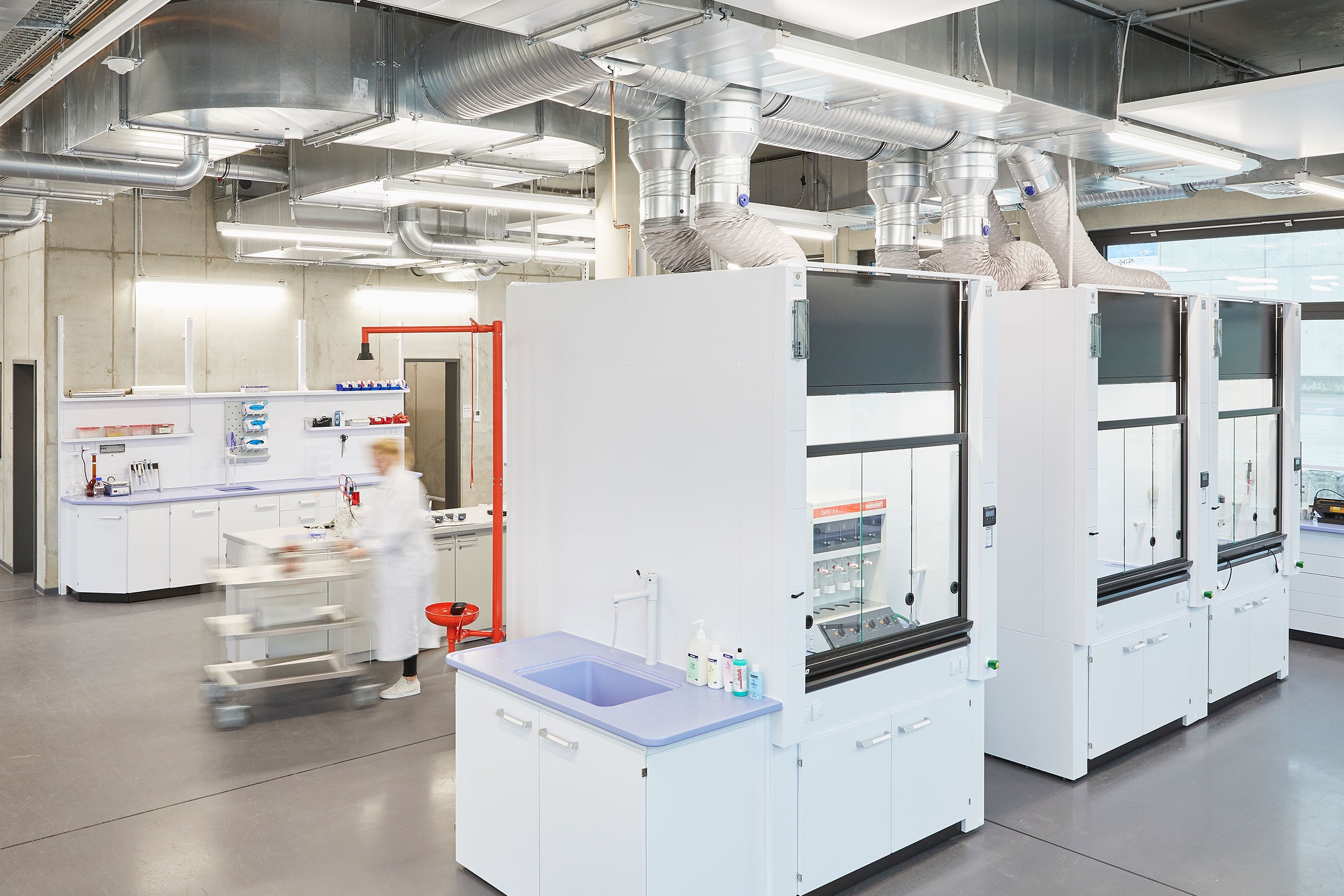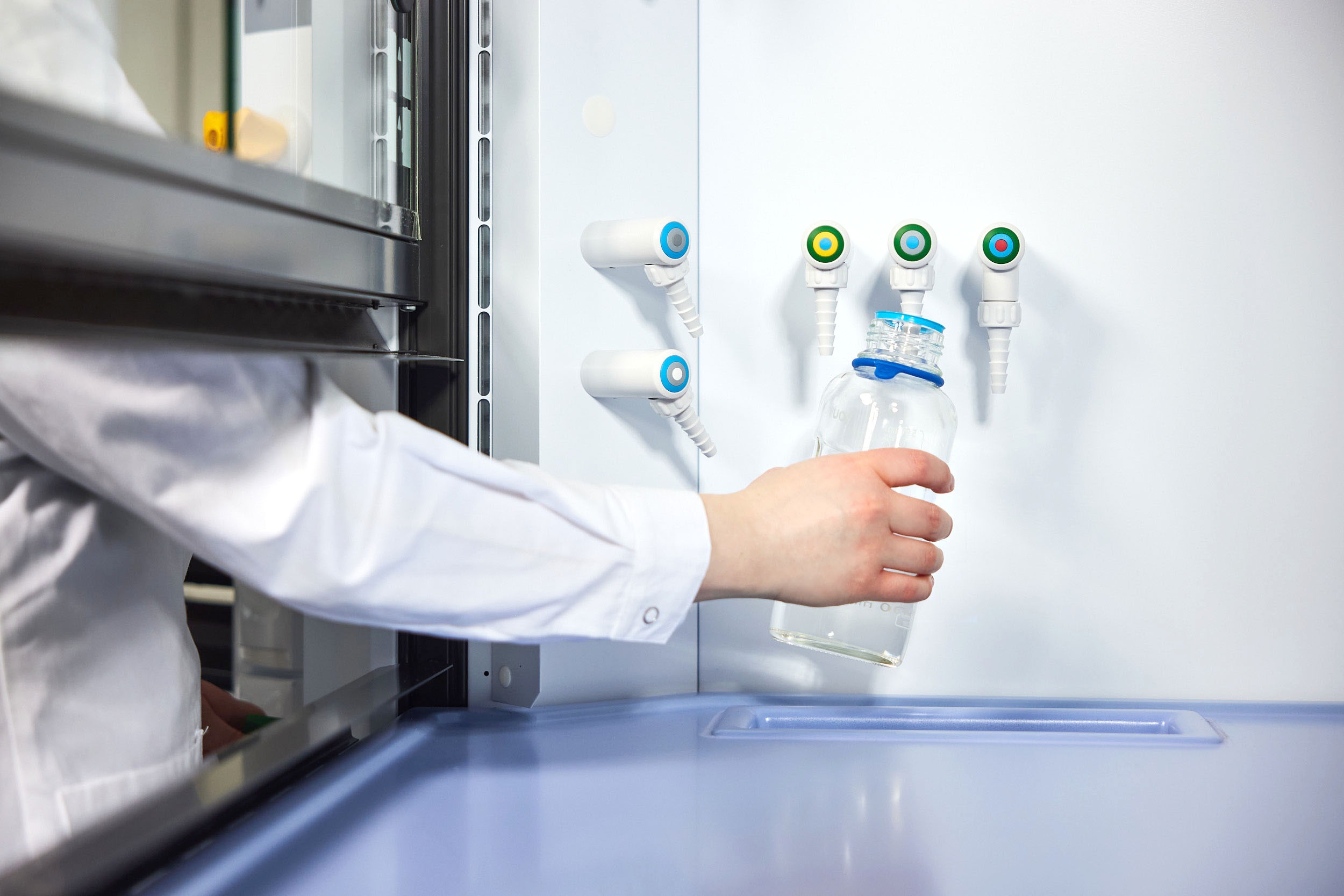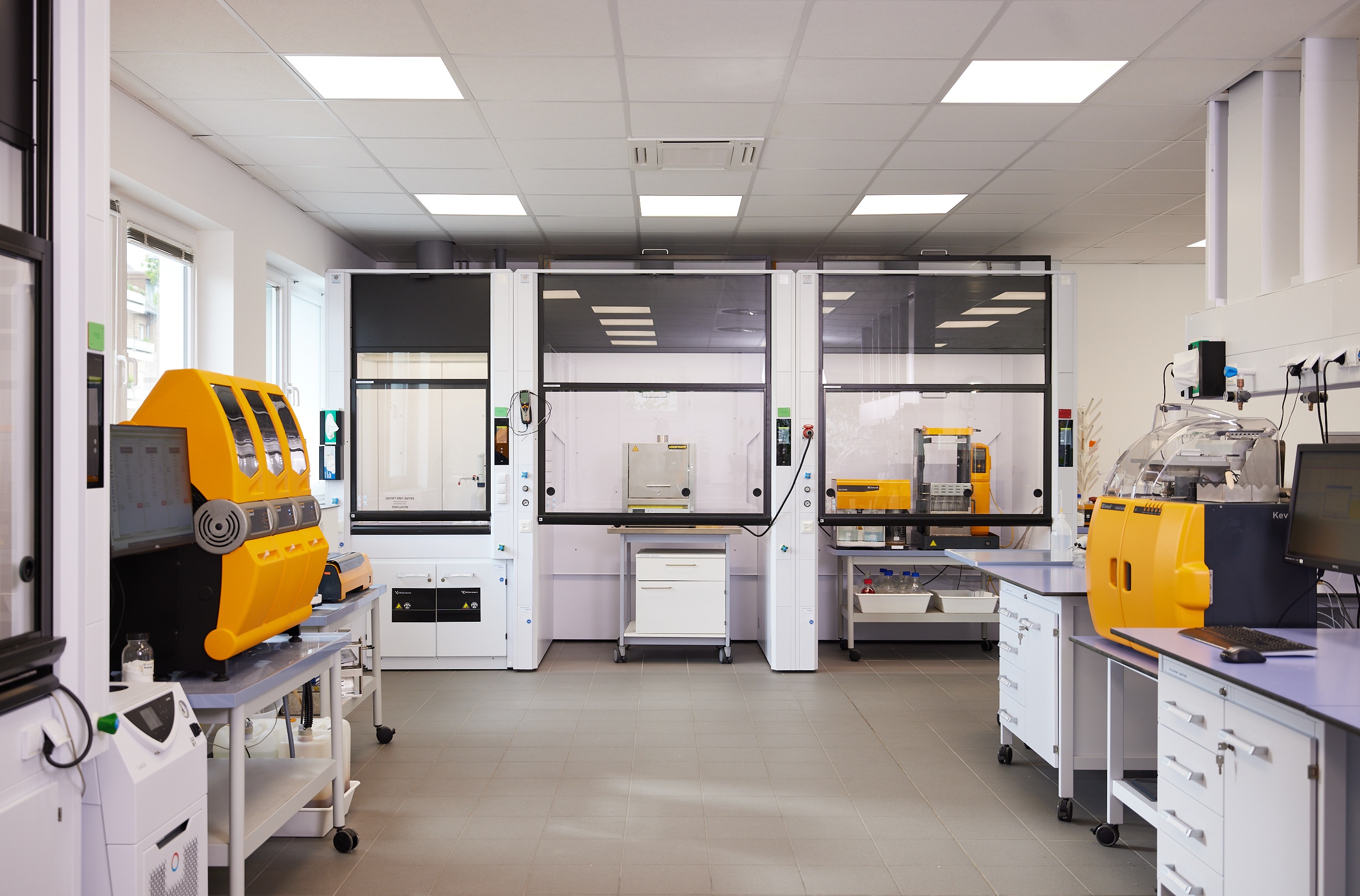
Daily laboratory work often follows a familiar routine: switching on equipment, preparing samples, working inside the fume cupboard — and rarely stopping to consider the complex technology operating in the background. Yet the laboratory fume cupboard is one of the most important safety systems in the lab. It influences protection, energy efficiency and sustainability and is still frequently underestimated.
This article highlights five aspects that even experienced professionals may not always be aware of.
Fume cupboards are major energy consumers and intelligent design can significantly reduce costs
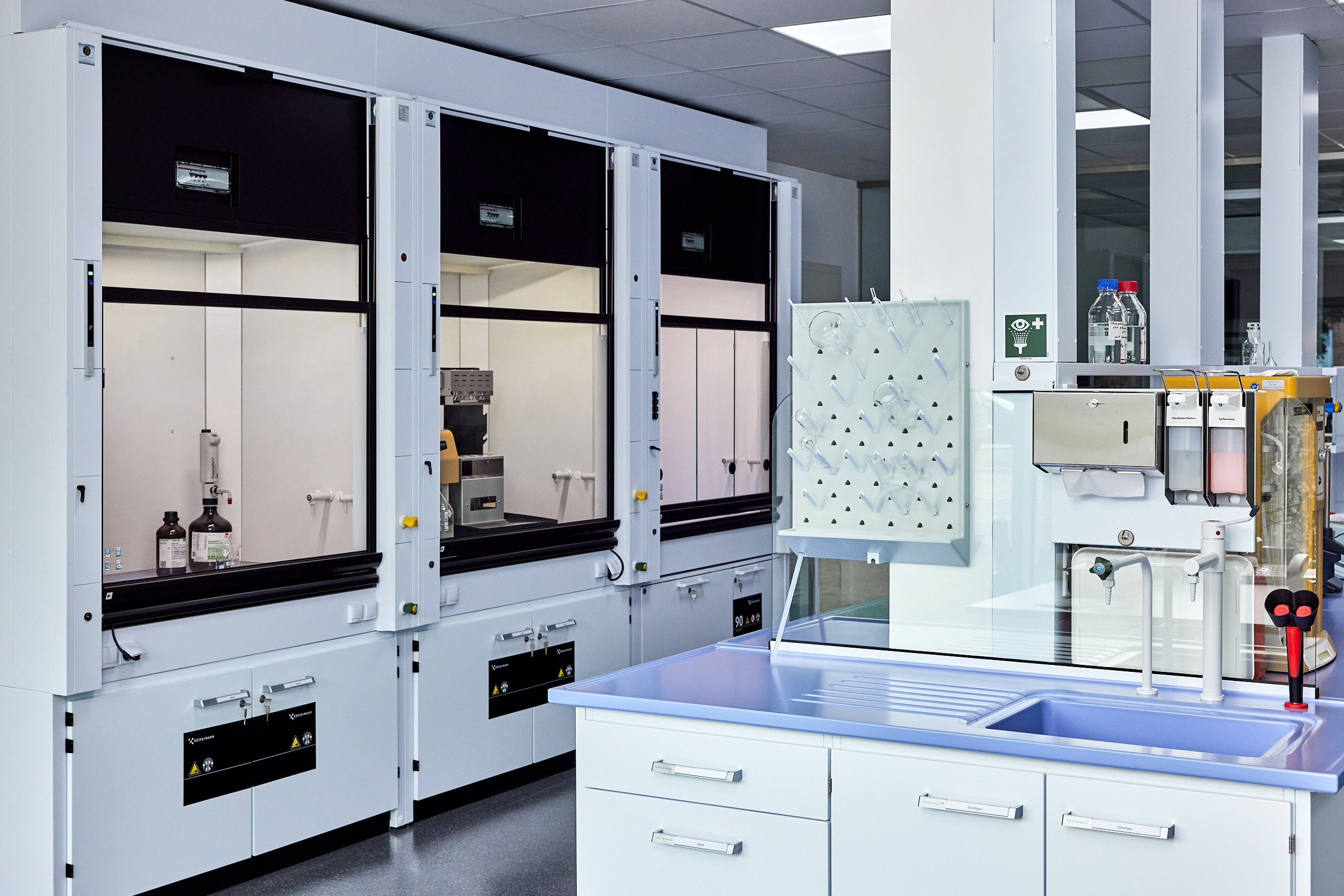
Up to 60% of a laboratory’s total energy consumption can be linked to ventilation systems, with fume cupboards playing a central role. They continuously extract conditioned air, making ventilation both costly and CO₂-intensive. Alongside safety, reducing air consumption has therefore become one of the key priorities in modern fume cupboard development.
More airflow does not automatically mean more safety
A common assumption is that the higher the exhaust airflow, the safer the fume cupboard. In reality, this is only partly true.
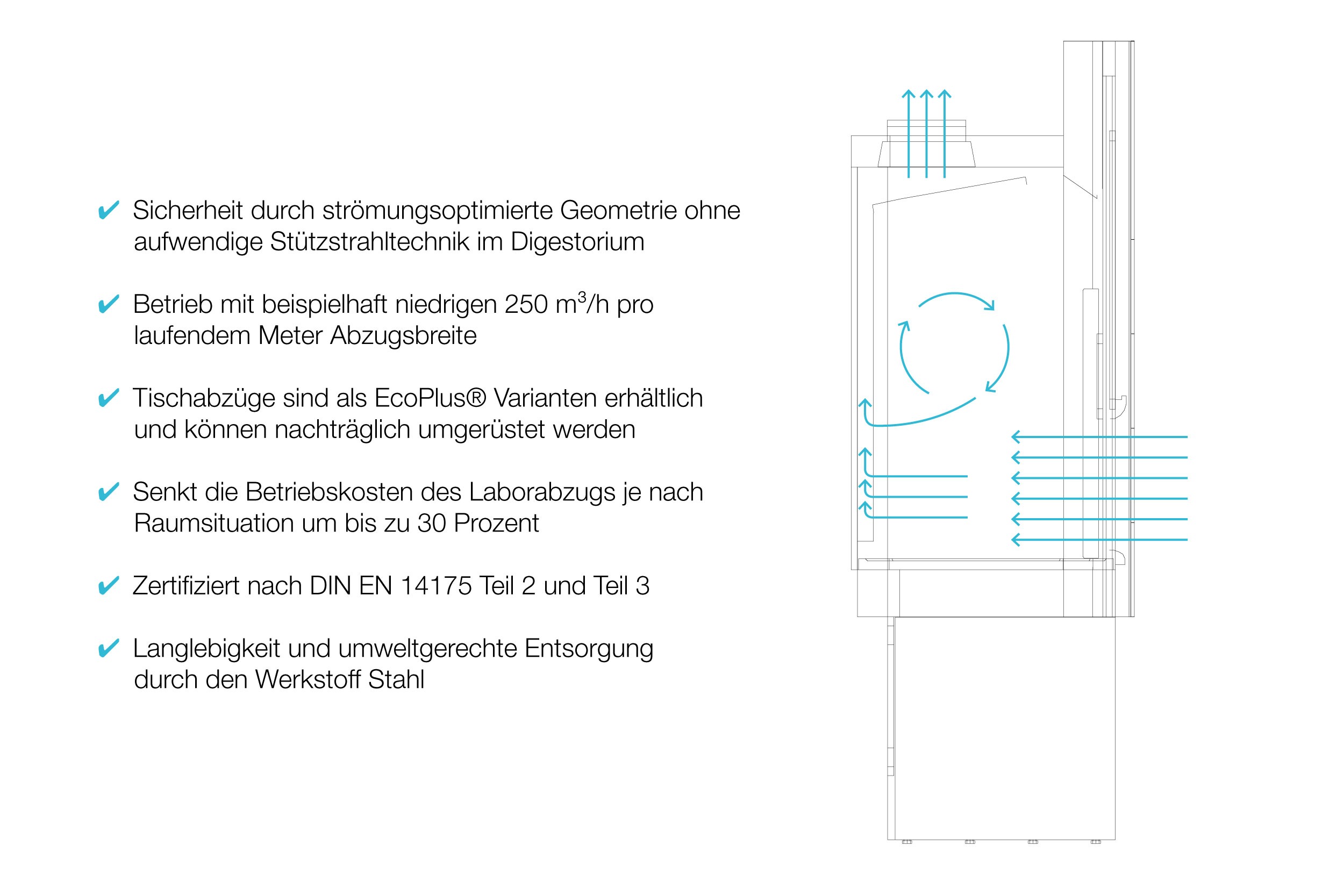
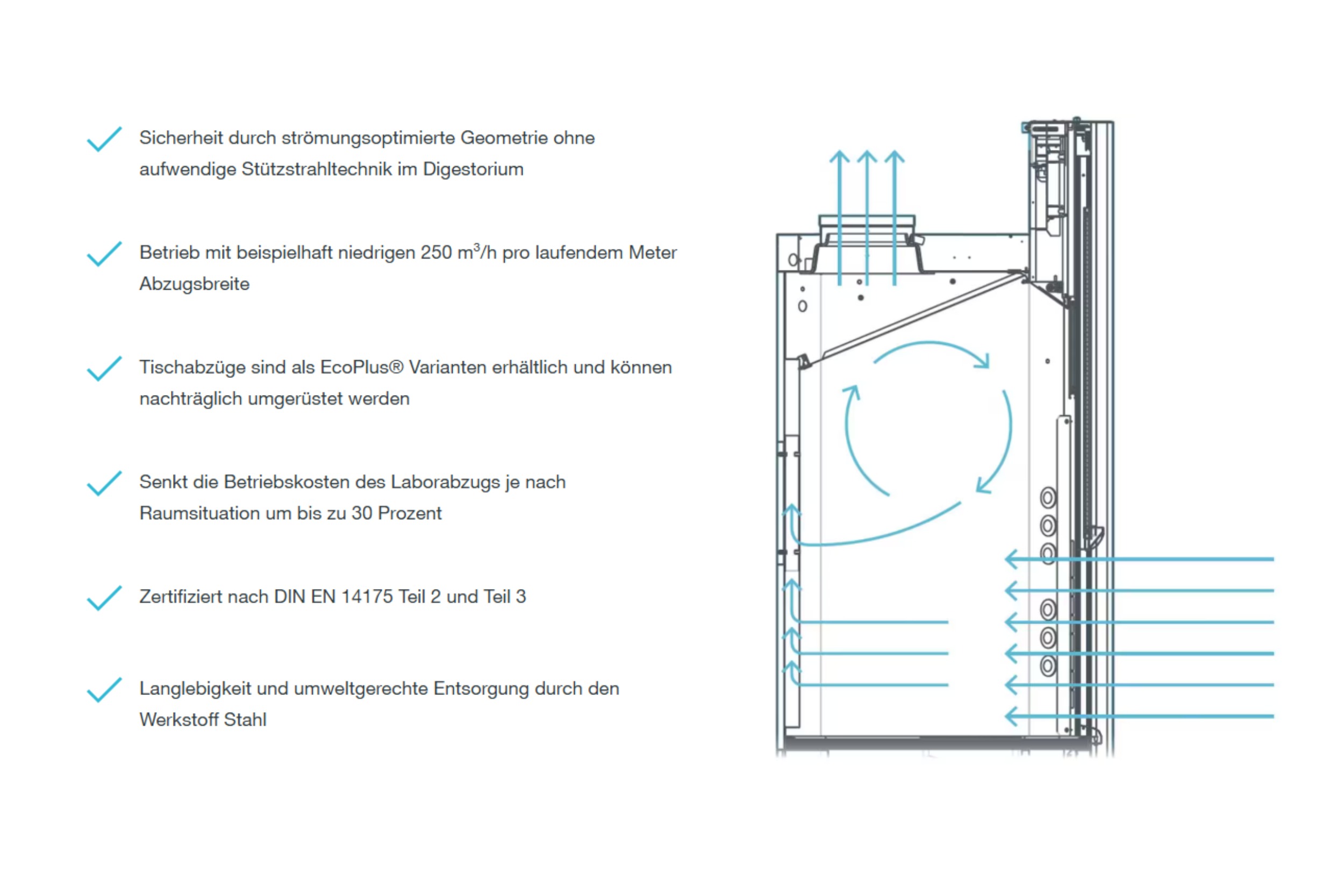
While increased airflow may initially improve containment performance, modern fume cupboards achieve safety not through excessive air volumes, but through sophisticated geometry and carefully engineered airflow patterns. The result is maximum safety with minimal resource consumption.
Small operating mistakes can have major consequences
Fume cupboards are part of complex laboratory workflows. Their protective performance depends not only on construction, but also on correct usage.
Open sashes, incorrectly positioned equipment or even people walking past can significantly disturb airflow and reduce containment efficiency. Modern systems such as Köttermann AutoProtect automatically close the sash once work is completed. This reduces user-related errors, improves safety and saves additional energy.
If an object protrudes from the working area, Köttermann CloseGuard uses a light curtain system to automatically stop the sash movement.
Protection goes far beyond gases alone
Fume cupboards are often associated primarily with protection against gases and vapours. In reality, their protective function is much broader as defined by the European standard EN 14175:
- preventing hazardous concentrations of gases, vapours or dust within the laboratory
- preventing explosive atmospheres inside the fume cupboard
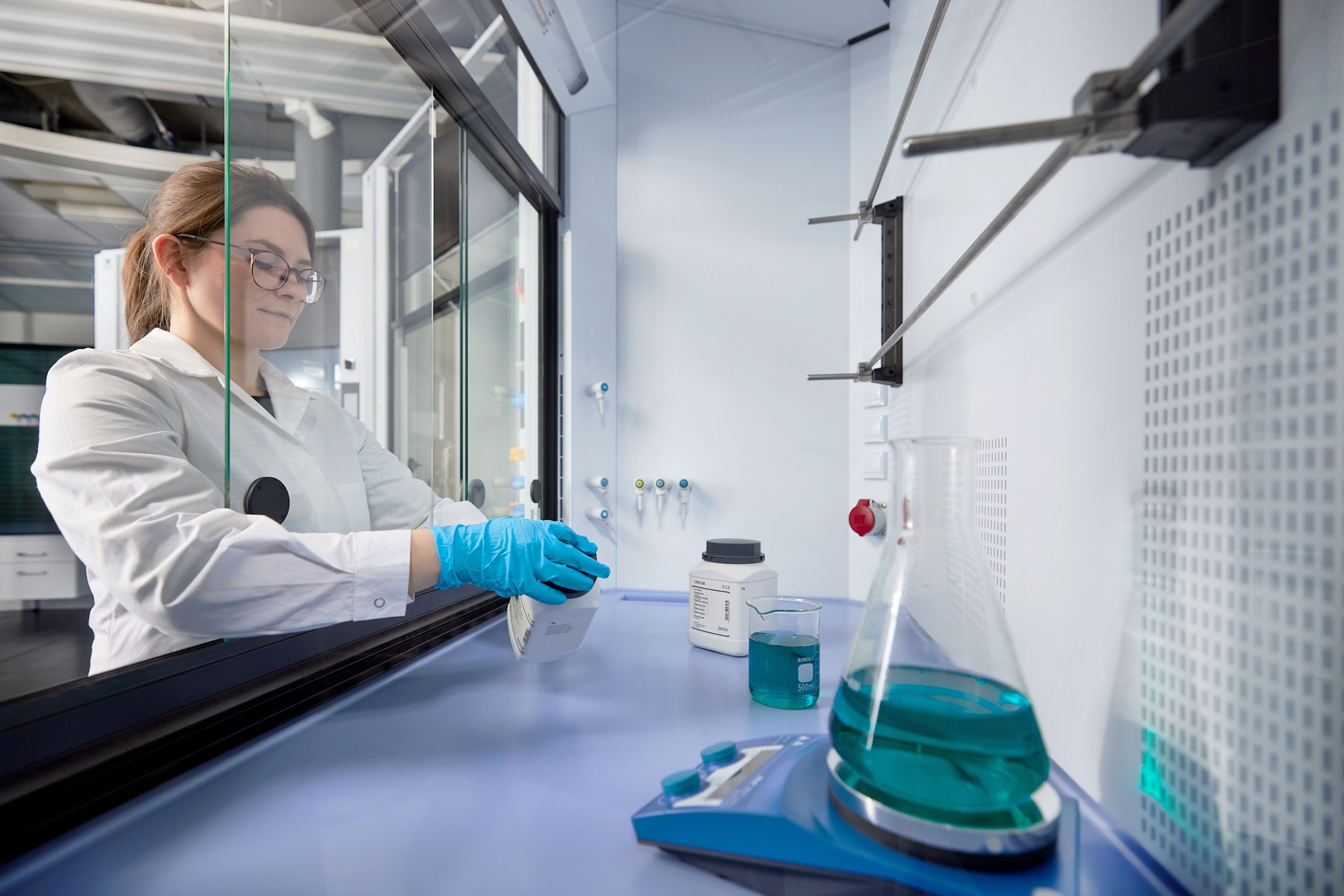
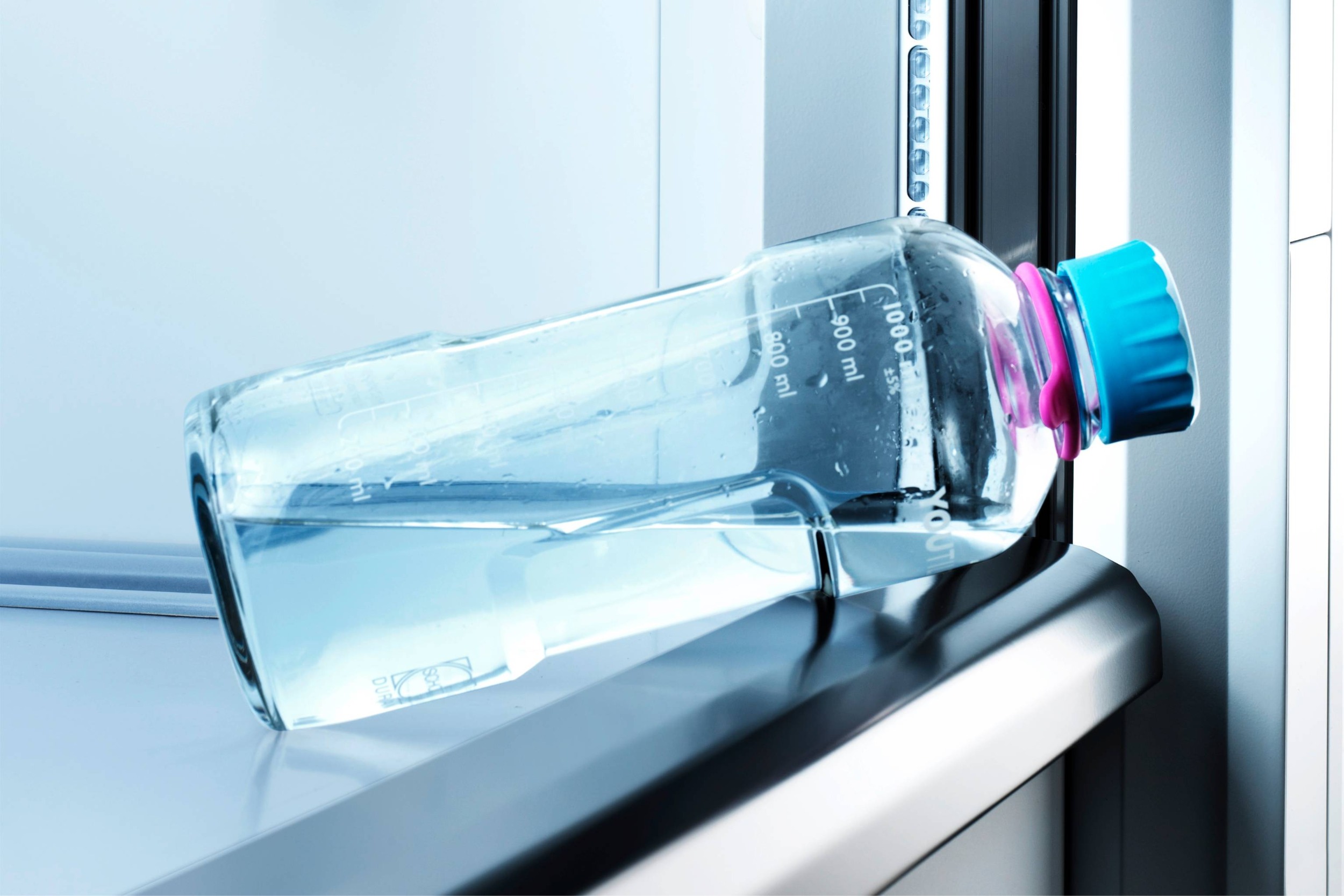
- protecting against physical hazards such as chemical splashes or flying fragments¹
Fume cupboards protect not only against invisible hazards such as gases and dust, but also against sudden physical risks. They therefore provide far more than “chemical protection” — serving instead as comprehensive safety barriers within the laboratory environment.
High-tech solutions improve ergonomics and safety
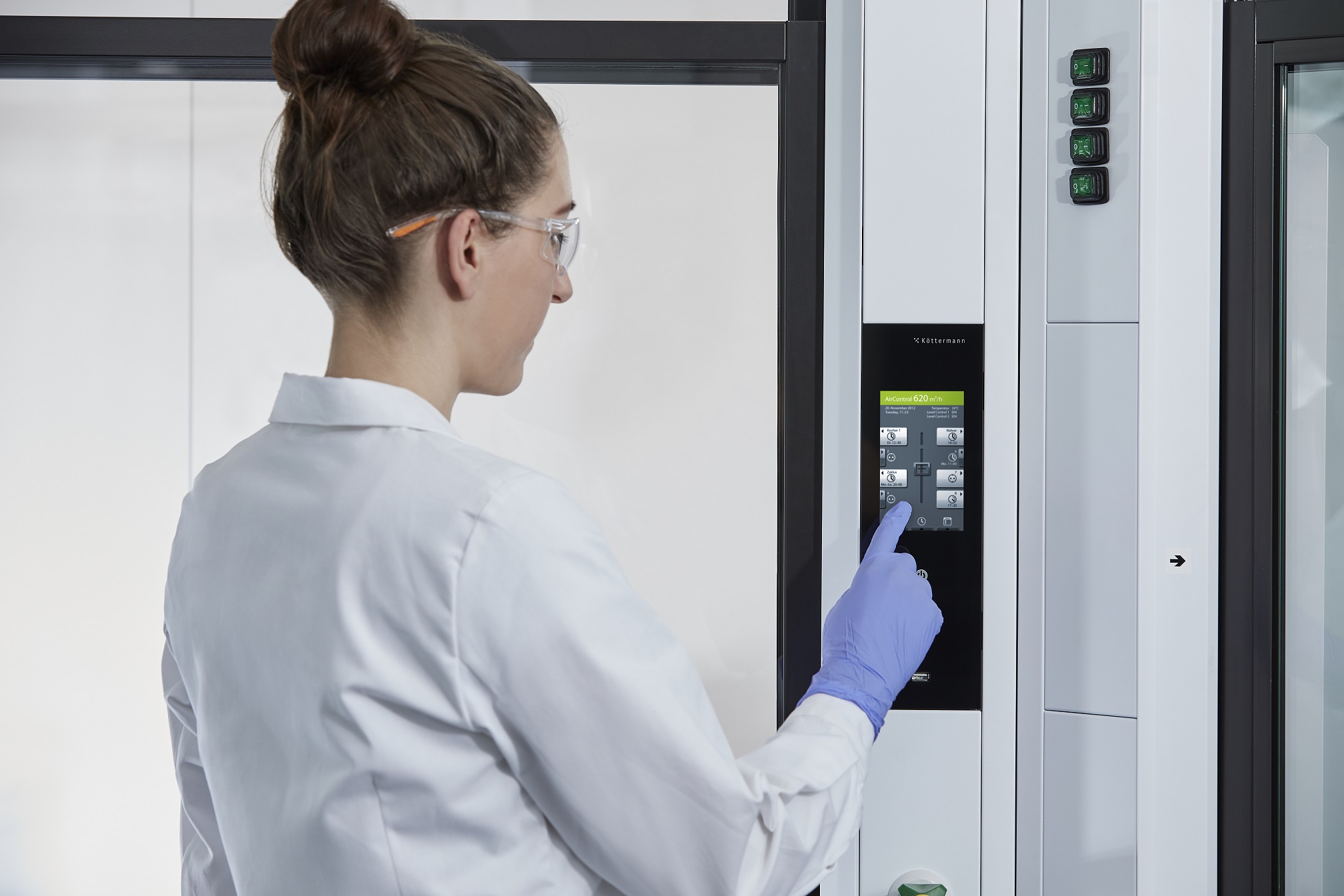
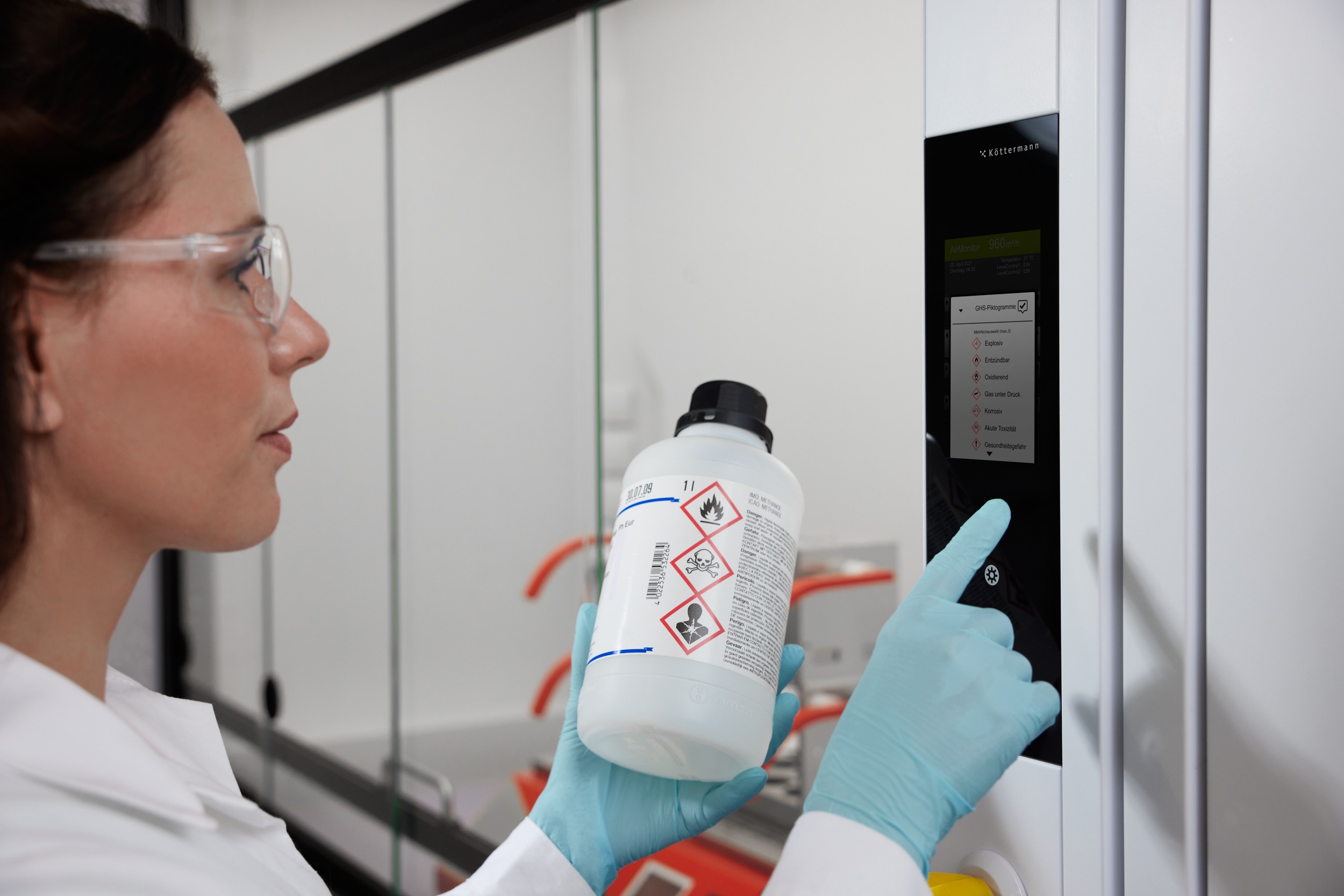
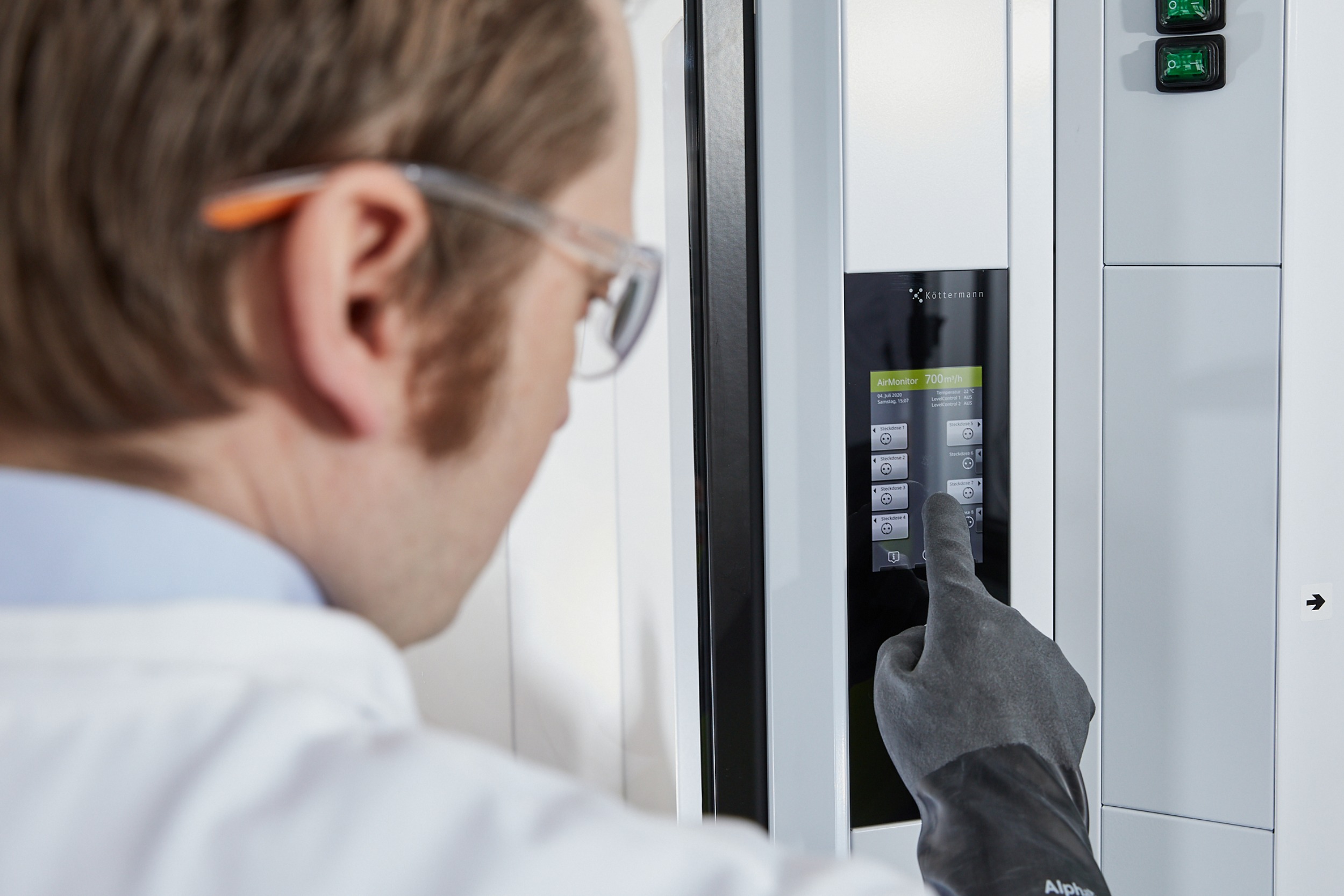
Modern fume cupboards have evolved into intelligent laboratory assistants. The Köttermann TouchTronic electronic control unit enables precise operation of all functions — even while wearing gloves.
It also allows hazardous substances used inside the cupboard to be displayed and socket timers to be programmed. In addition, circuit breakers with integrated measurement functions monitor power consumption and help identify energy-saving potential.
Conclusion
Modern fume cupboards are far more than simple exhaust systems. They play a key role in laboratory safety, energy efficiency, sustainability and ergonomics.
Innovative solutions such as the Köttermann EXPLORIS series demonstrate how protection, efficiency and user comfort can be intelligently combined. Anyone aiming to create a safe and sustainable laboratory environment can no longer overlook modern fume cupboard technology.
¹ Deutsche Gesetzliche Unfallversicherung (DGUV): Sicheres Arbeiten in Laboratorien – Grundlagen und Handlungshilfen. 1. Auflage 12/2008. S. 133
How Variable Air Volume Control Works
Abluftregelsysteme sind hier ein bedeutendes Element, denn diese reduzieren bei geschlossenem Frontschieber den Abluftstrom, ohne die Sicherheit des Abzugs zu gefährden. Der Abluftvolumenstrom wird in Abhängigkeit von der Frontschieberöffnung über eine motorisch angetriebene Stellklappe geregelt. Für jeden Betriebszustand des Abzugs wird dem Laborraum gerade so viel Luft entnommen, wie für den sicheren Betrieb des Abzugs notwendig. Bei geschlossenem Frontschieber lässt sich so der Volumenstrom eines Abzugs um etwa 50 Prozent gegenüber dem geöffneten Zustand reduzieren. Für einfaches Bedienen im Arbeitsalltag: Bei Köttermann Laborabzügen wird die Frontschieberöffnung über die elektronische Bedieneinheit TouchTronic mühelos über den Regler am Display eingestellt – präzise per Schieben oder punktuell per Tippen.
Produktdesign – mehr als Optik
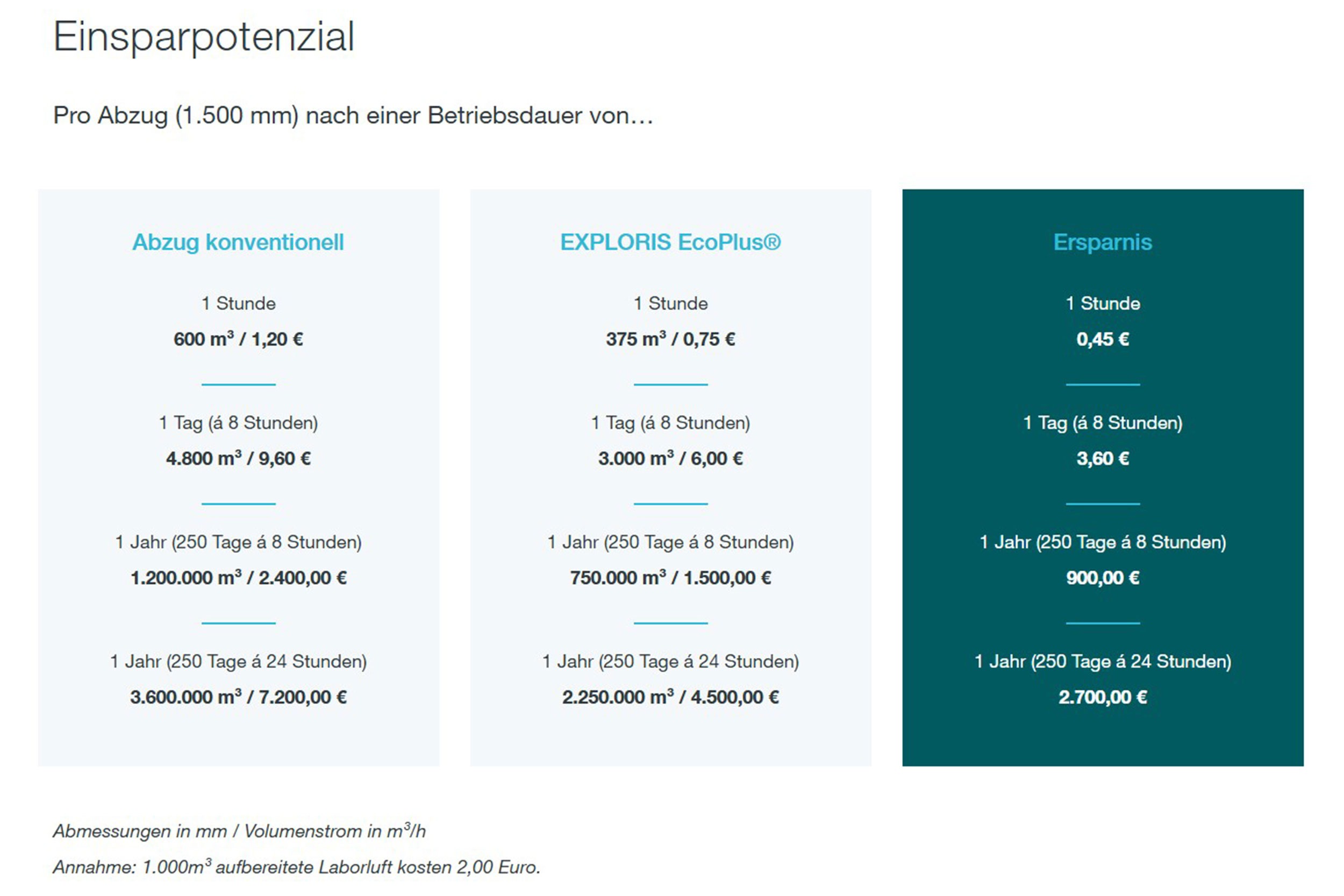
Entscheidend ist allerdings auch die Strömungstechnik von Laborabzügen. Ein durchdachtes Produktdesign senkt die Betriebskosten unter Einhaltung der Sicherheitsanforderungen. Beispielsweise benötigt der Köttermann Laborabzug EcoPlus dank innovativer Luftführung bis zu 30 % weniger Abluftvolumenstrom als Standardabzüge – bei gleichbleibend hoher Sicherheit. So spart dieser bei einer Arbeitszeit von acht Stunden am Tag jährlich bis zu 900 Euro Betriebskosten pro Abzug und trägt gleichzeitig aktiv zur Nachhaltigkeit bei. Bei einem 24 Stunden Betrieb werden sogar Kosten in Höhe von etwa 2.700 Euro im Jahr vermieden. Will man das Labor nachhaltig ausstatten, ist der EcoPlus die richtige Wahl.