Laboratories need reliable technical conditions to ensure that people can work safely. This requires a high-performance infrastructure, much of which consumes energy. Rising costs and increasingly stringent sustainability requirements are bringing energy use into sharper focus. Particularly in new builds and major refurbishments, there is an opportunity to plan for lower energy consumption from the outset. Many decisions made during the planning phase will influence how much energy the laboratory ultimately uses.

An example from Harvard University illustrates the importance of this issue. Laboratories account for around 20 per cent of the university’s building floor area, yet almost 44 per cent of its energy consumption.[1] These figures cannot simply be applied to other laboratory buildings, but they demonstrate why energy use deserves attention from the earliest planning stages. Energy-efficient design does not mean reducing equipment or ventilation capacity as far as possible. It means identifying precisely what is needed for the intended use, then tailoring the building services and laboratory fit-out accordingly. In other words, energy-efficient laboratory planning starts with an early understanding of how the space will be used and what is needed to keep people safe.

What does the laboratory actually need to deliver?

Energy-efficient laboratory planning begins with the work that will take place there. Three key questions should be answered at the outset:

  • What activities will take place in the rooms?
  • Which equipment will be used, and what substances will people work with?
  • How might the use of the laboratory change in future?

The answers shape the spatial layout and determine the technical infrastructure required. Designing a laboratory from the inside out means starting with the work that will be carried out there. The layout and fit-out are then developed around it. Future users should be involved early on: they understand how procedures work in practice, and their knowledge helps ensure the design reflects actual needs.

This matters for energy efficiency too. Technical systems must provide sufficient capacity, but should not be sized on the basis of unnecessarily high assumptions. The more accurately future use is understood, the better informed these decisions can be.

How can laboratory ventilation be designed around actual demand?

Ventilation deserves particular attention when assessing energy use. In a laboratory, it plays an essential role in safe operation and in maintaining the required environmental conditions. At the same time, air must be moved and often heated or cooled. Energy-efficient laboratory ventilation therefore does not simply mean supplying as little air as possible. It must reliably provide what each area needs.

The required capacity depends on how the space is used. Work involving hazardous substances presents different challenges from activities without comparable exposure risks. Fume cupboards and the associated extract air also affect the ventilation design. Heat released into the room by laboratory equipment must be taken into account as well. This leads to an important planning principle: not every laboratory area needs the same conditions. Rather than designing every area for the highest conceivable demand, a more differentiated assessment makes sense. Ventilation can then be matched to its intended use without compromising safety.

How do fume cupboards affect energy consumption?

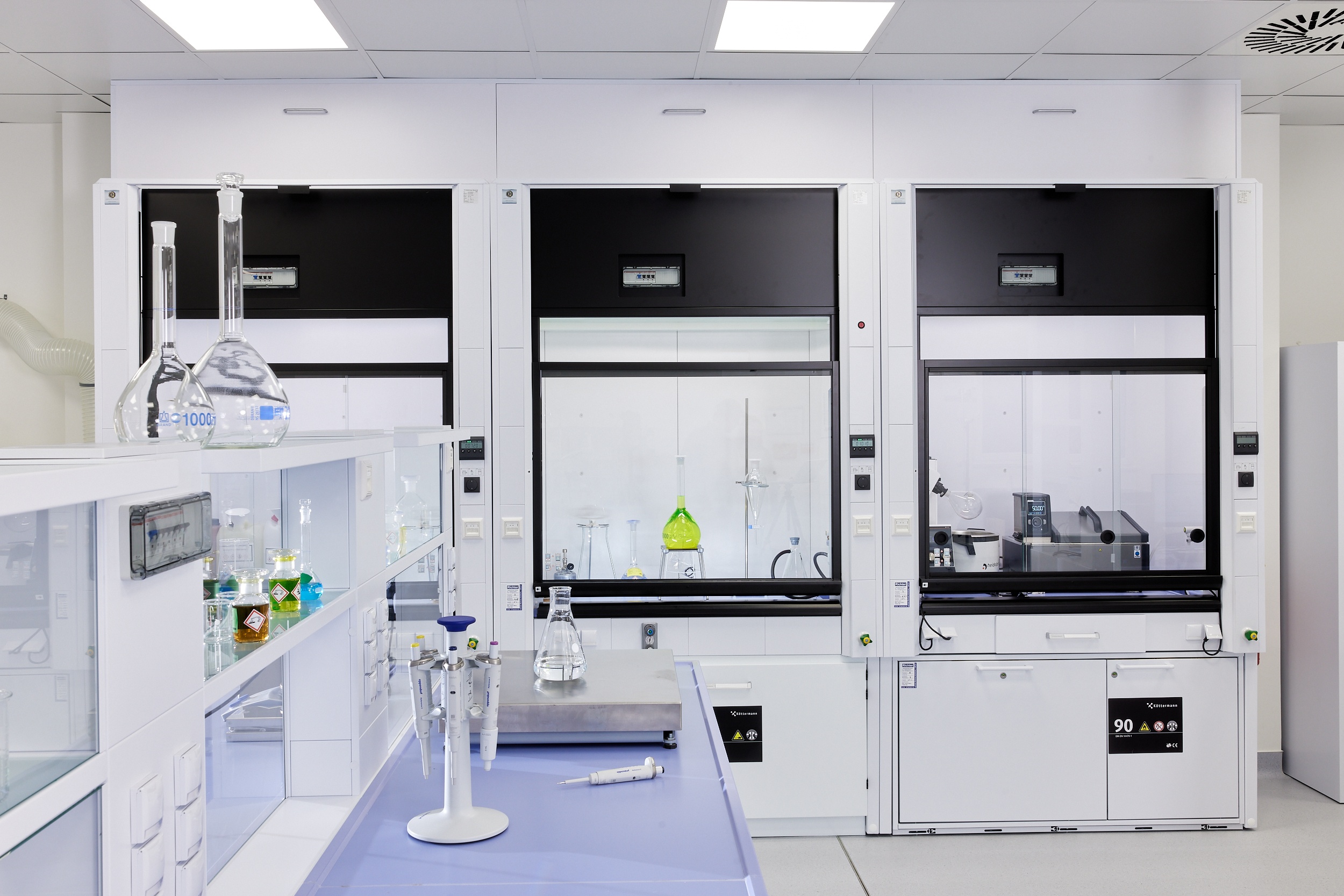
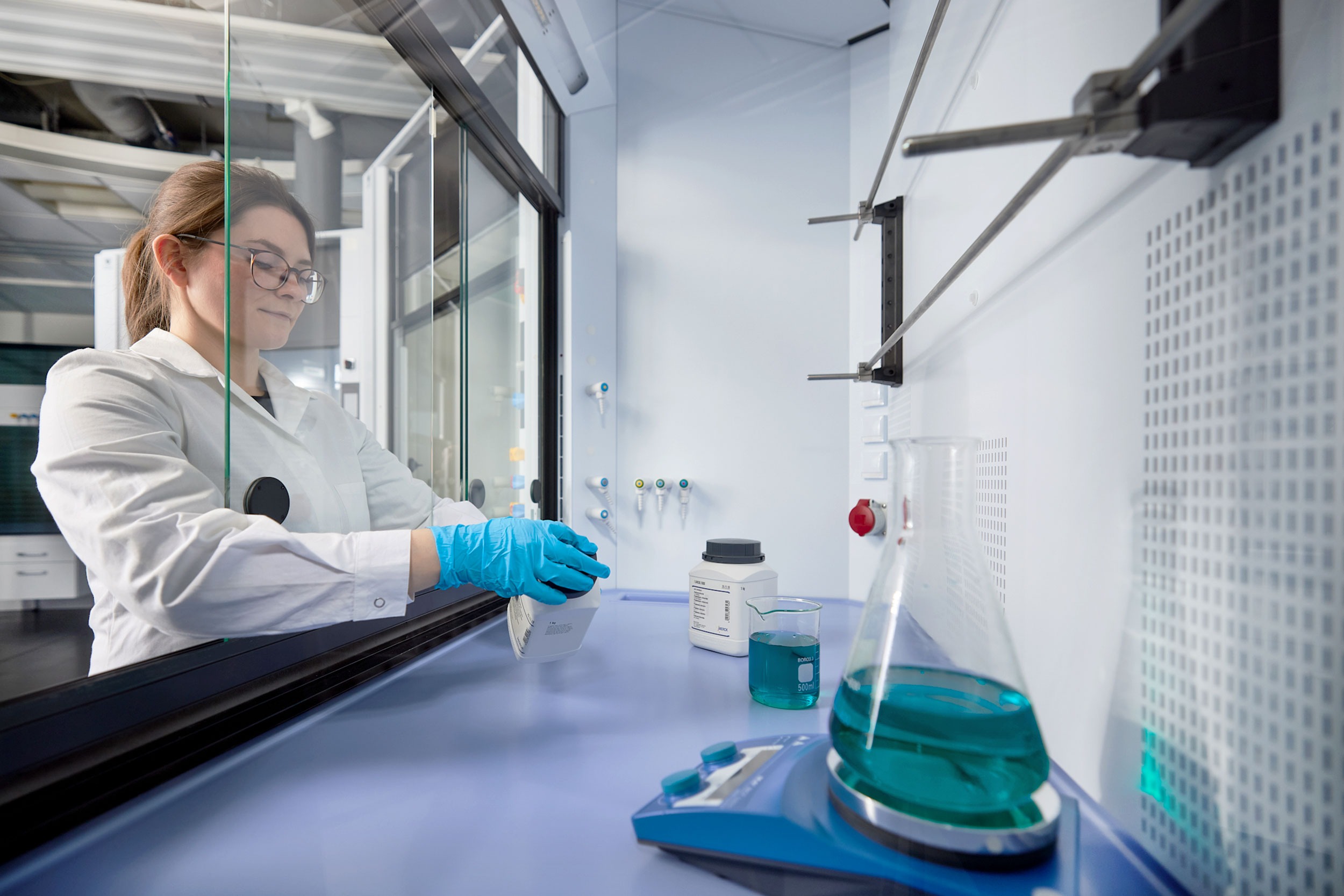
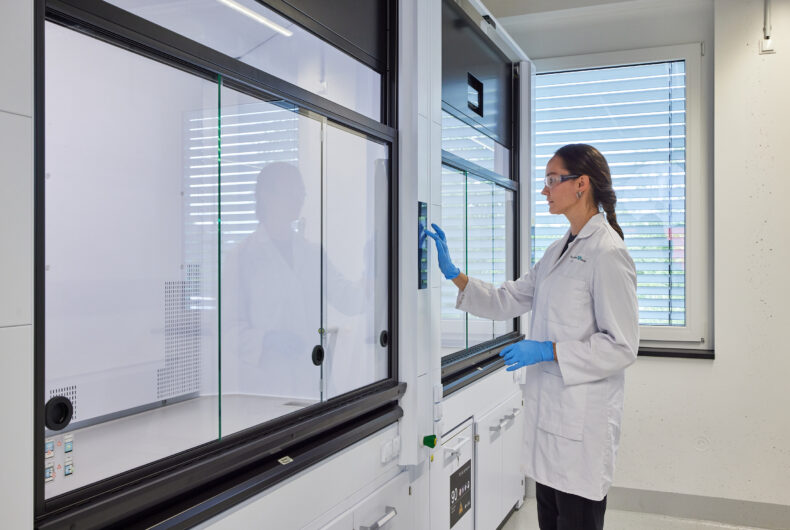
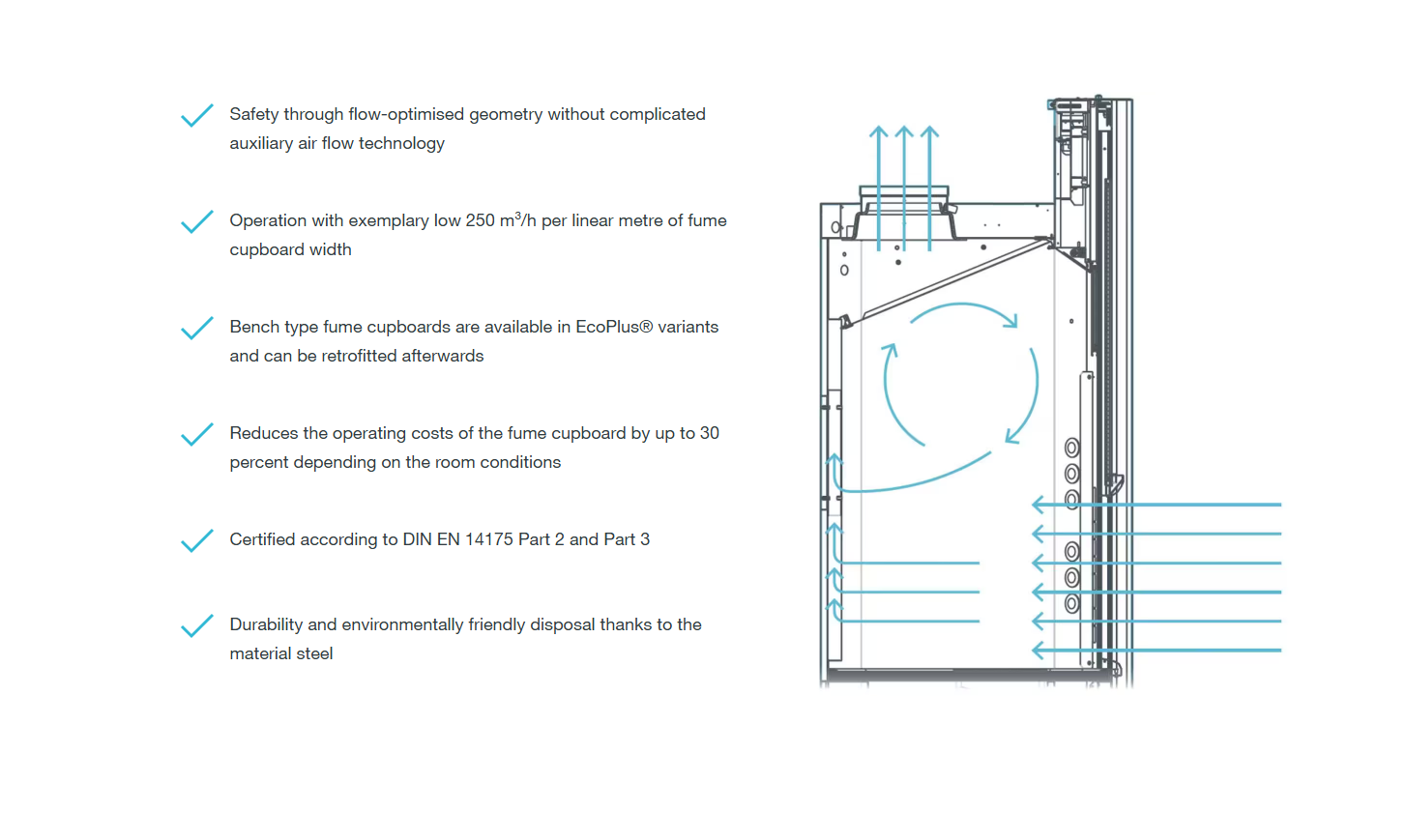
Fume cupboards are among the key safety installations in many laboratories. Their primary purpose is to protect the people working there. They prevent gases, vapours and dust from escaping into the laboratory at hazardous concentrations. These protection objectives are also reflected in EN 14175, the European standard for fume cupboards. To maintain safe working conditions inside the cupboard, air is extracted from the room. That air must be replaced through the room ventilation system and, depending on the location, conditioned as necessary. The volume of extract air therefore has a direct impact on the building’s energy consumption. How much is needed depends, among other things, on the design of the fume cupboard and its control system. Variable air volume (VAV) control, for example, can adjust extraction to the position of the sash. In the Köttermann EcoPlus fume cupboard, a specially designed flow pattern achieves the required containment performance with reduced extraction.

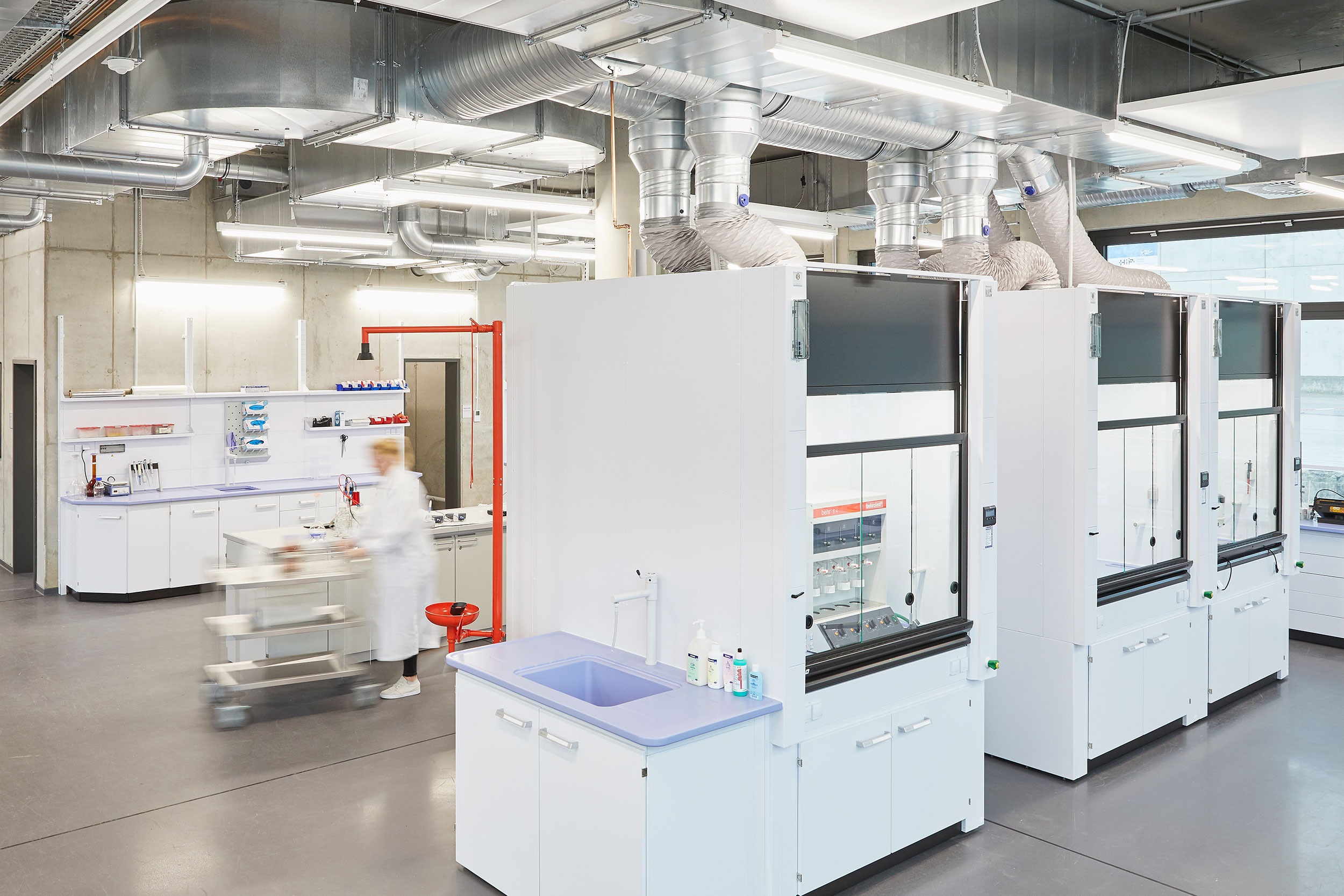
Good laboratory planning therefore considers how fume cupboards are integrated into the ventilation design and ensures that their extract airflow is coordinated with the room ventilation system. Planning should not stop at the laboratory door. It is important to involve building services engineering at an early stage. In practice, this means bringing the relevant disciplines together at the start of a project. When key parameters are only established late in the process, changes are often more difficult. If they are clarified early, the building services can be designed around them from the outset.
200526_DrGraner_WEB-21
Why should flexibility be built into the design?

A laboratory’s needs can change considerably over its lifetime. Research projects evolve, new methods emerge and equipment is replaced. Many facilities also work across disciplines, with workstations used for different activities. A design that caters for only one fixed set-up can quickly reach its limits.

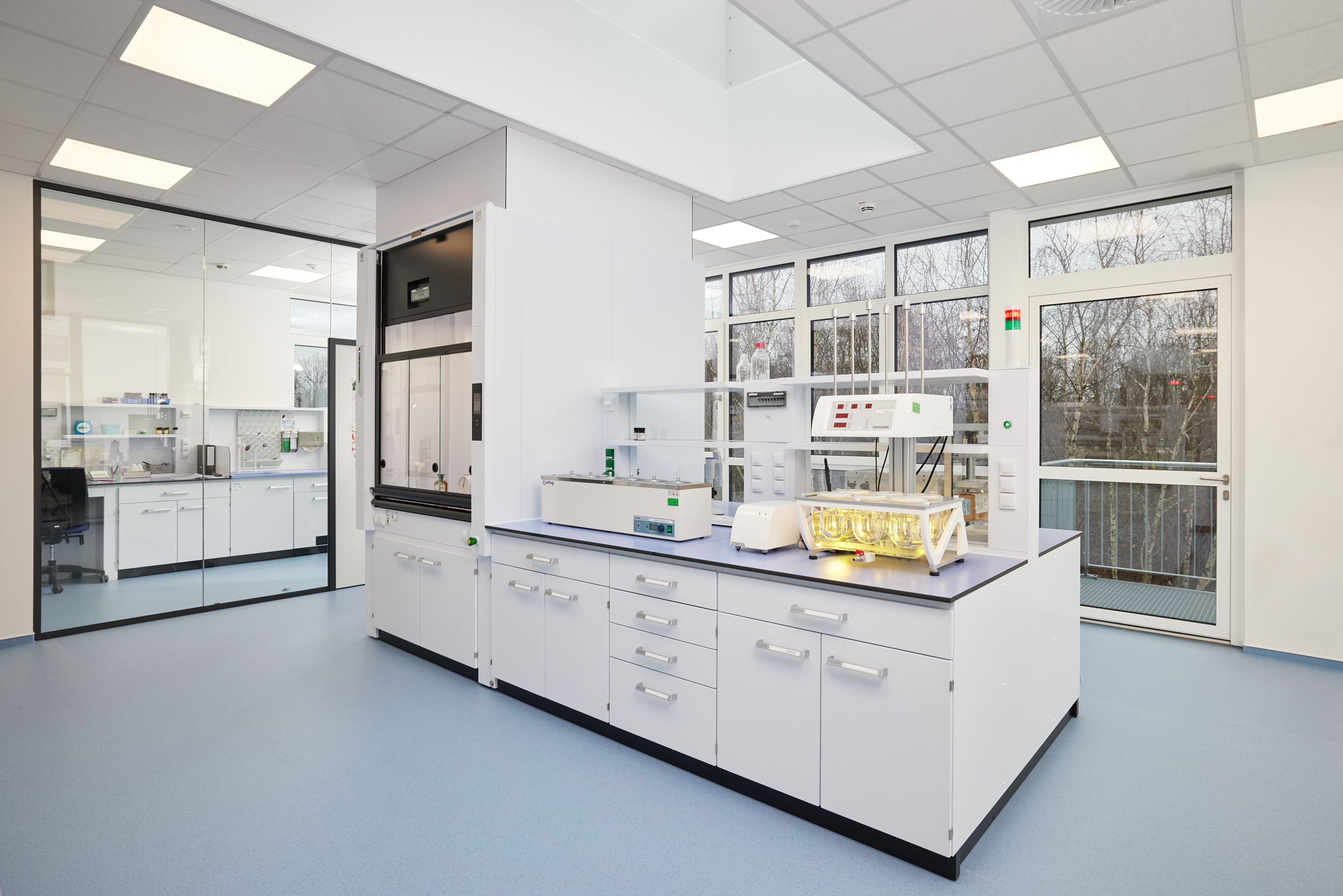
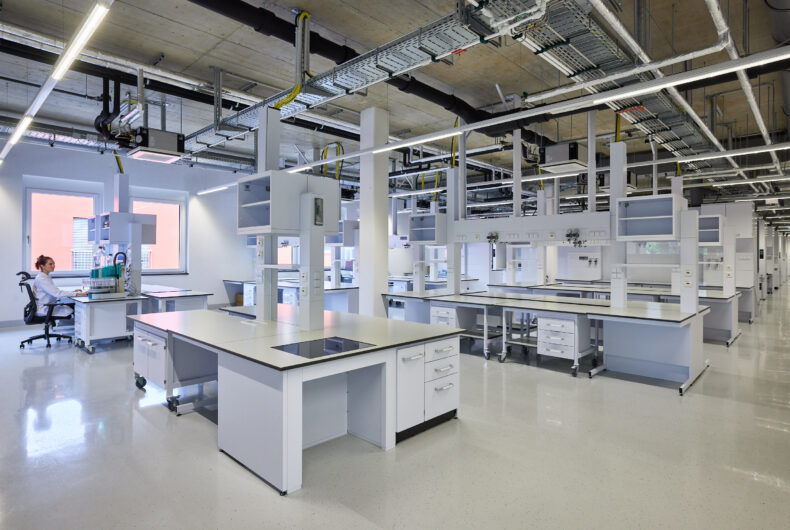
Flexible layouts make it easier to respond to change. Modular laboratory furniture also means that work areas can be adapted without being completely rebuilt. Köttermann’s modular system is designed with this adaptability in mind. Mixed layouts are common: reconfigurable work areas can be combined with fixed installations that are needed over the long term.

This should, however, be distinguished from direct energy savings. Flexible furniture does not automatically reduce electricity or heating demand. It can nevertheless support the longer-term use of existing resources. Durable laboratory furniture is also relevant here. Köttermann’s powder-coated steel infrastructure is designed for long-term use while remaining compatible with modular layouts. Flexibility therefore adds an important resource-efficiency dimension to energy-conscious planning.
200526_DrGraner_WEB-14
How can the spatial layout contribute to energy efficiency?

The way a laboratory is organised can also offer opportunities to save energy. During planning, it is worth identifying which work areas require, for example, specific temperature control. Where activities with similar technical needs can sensibly be grouped together, the building services can be tailored more precisely to those areas.

At the same time, workstations should be arranged around the tasks people will perform. Short routes make day-to-day work easier and help ensure equipment and materials are available where they are needed. Their main benefit, however, lies in efficient workflows and ergonomic laboratory design rather than directly measurable energy savings.

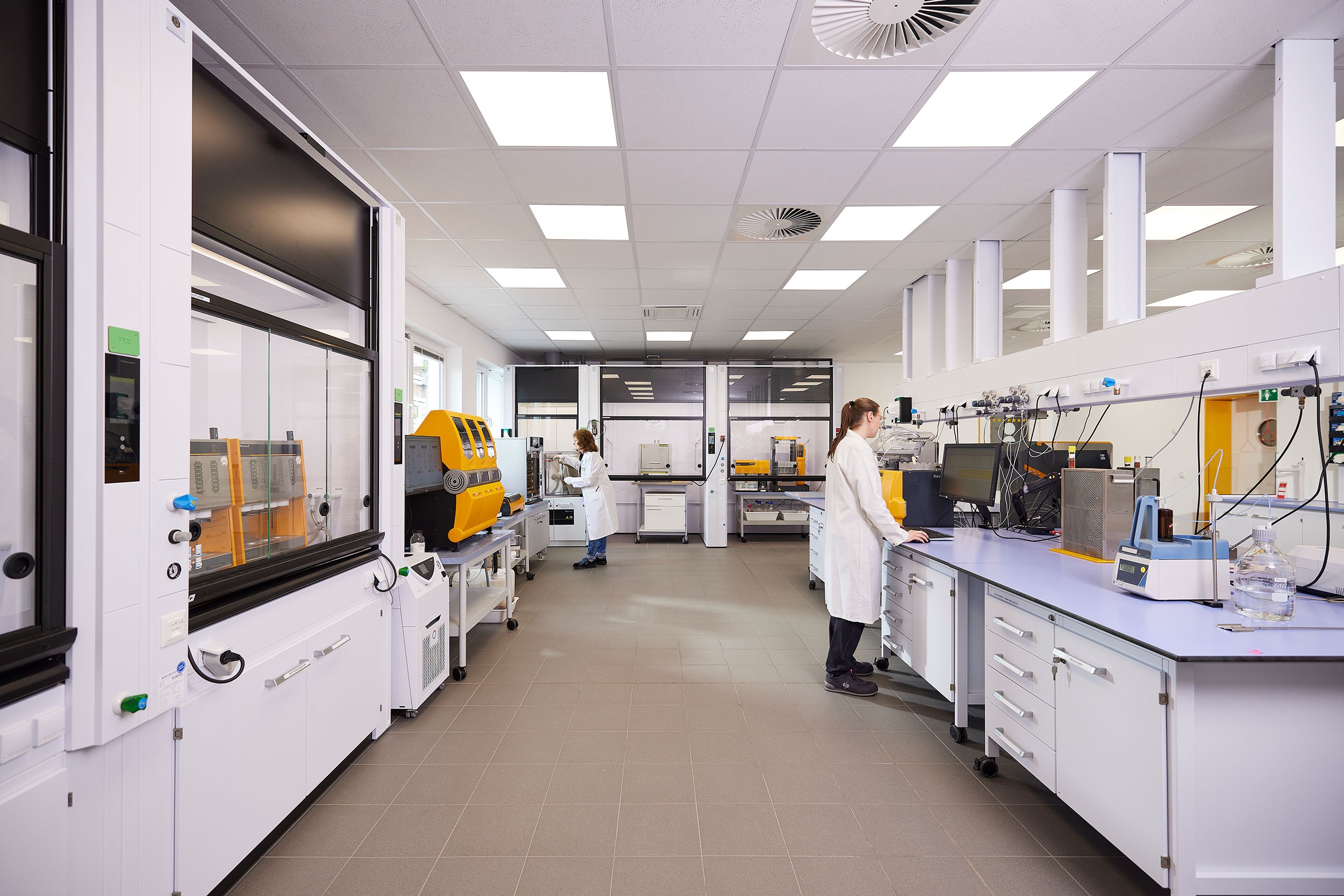
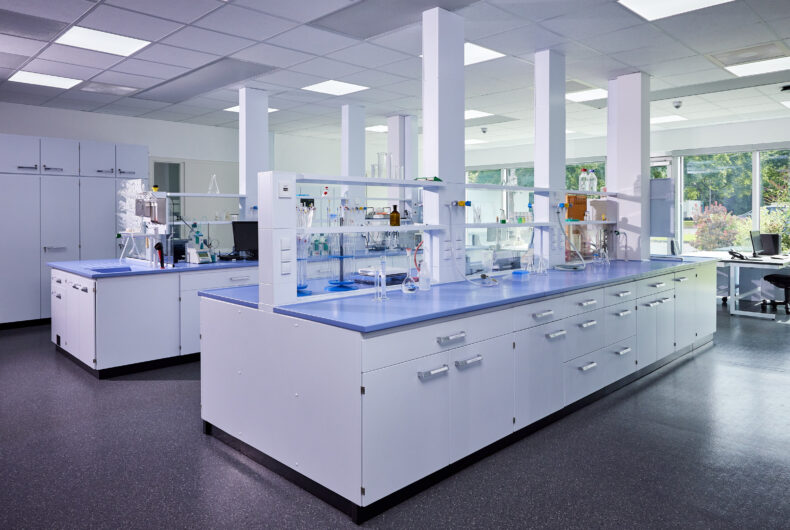
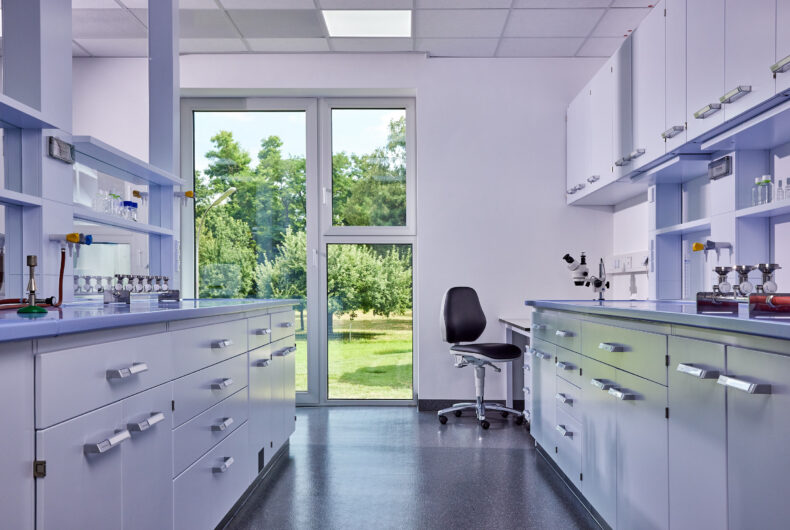
Available daylight can also be incorporated into the layout. One example is Stadtentwässerung Schweinfurt (internal link). Large windows and transparent glass inserts in the service columns allow daylight to reach well into the laboratory areas. This creates a bright working environment and can also support a more sustainable lighting strategy.

Thoughtful spatial planning therefore brings different objectives together. It takes account of energy use while supporting effective workflows and creating a working environment designed around the people in the laboratory.
250724_Köttermann_StadtentwässerungSchweinfurt_WEB-6
How can energy efficiency be planned and measured?

Even careful planning initially relies on assumptions about future use. Only after commissioning does it become clear how the laboratory actually operates. Activities may change, new equipment may be added, or technical systems may be used differently from what was originally envisaged. It is therefore worth deciding early on how energy-efficient operation will be measured. Appropriate performance indicators make it possible to compare design targets with actual consumption and track developments over time.

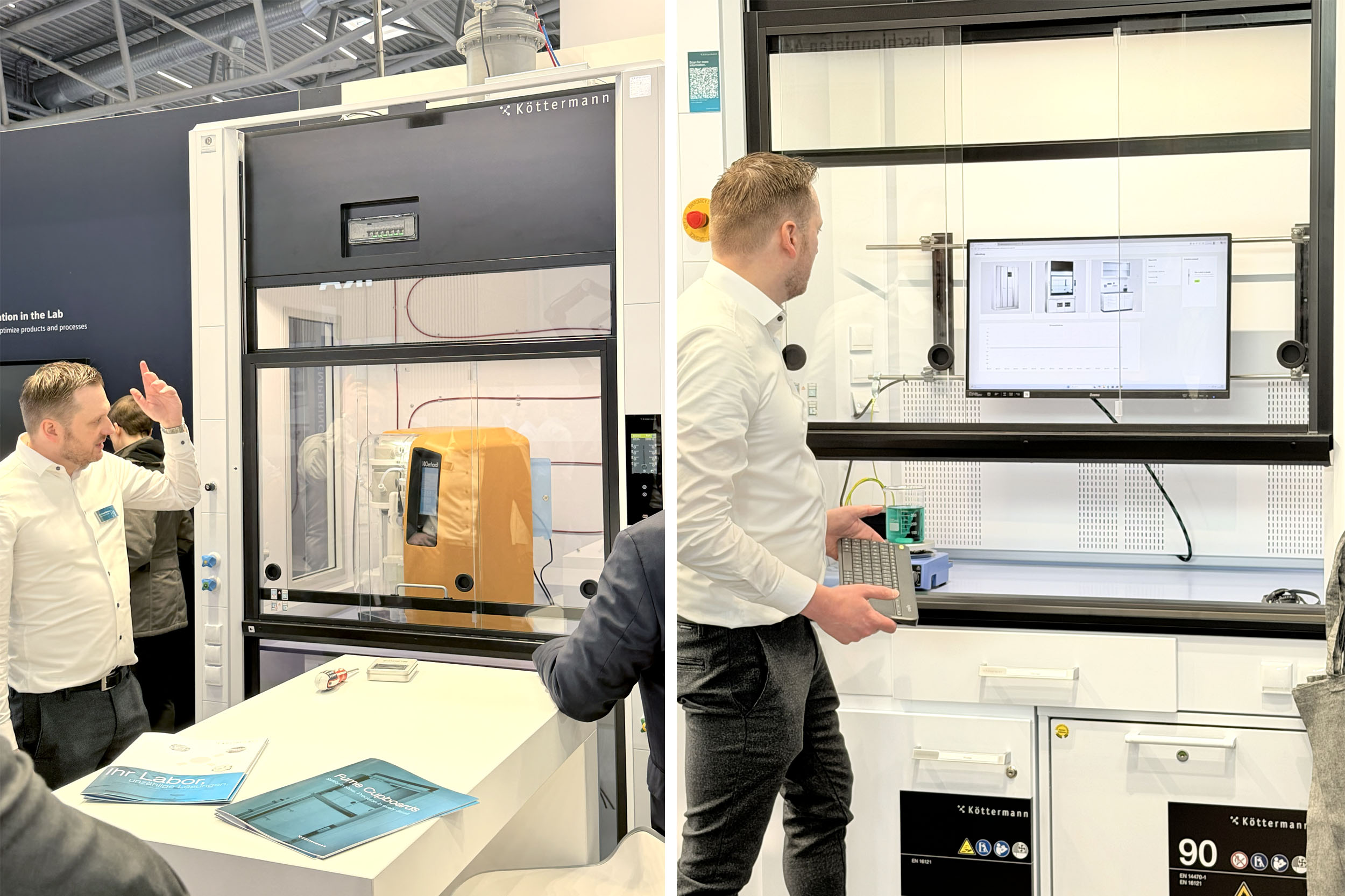
A connected laboratory offers further opportunities. Köttermann sees laboratory furniture and infrastructure as a platform into which technologies from different companies can be integrated. Together with its partners Siemens, C. Gerhardt and Liebherr Professional Appliances, Köttermann can demonstrate how a laboratory process can be digitally supported from sample storage through to analysis.

For energy efficiency, the transparency created by this connectivity is particularly valuable. Measuring systems can record energy consumption directly within a process, for example at an analytical instrument inside a fume cupboard. This shows where energy is actually being used. The information can then help assess operation more accurately and identify potential opportunities for optimisation. Connectivity makes it possible to understand actual laboratory operation better and base decisions on more reliable data.

Energy efficiency does not end at commissioning. Considering at the planning stage which information will be needed later, and how it will be captured, creates a sound basis for improving operations over the long term.

Checklist: What should energy-efficient laboratory planning cover?
1

Analyse actual use
What work will take place in the laboratory? The intended activities largely determine how rooms and technical systems need to be designed.

2

Size technical systems to demand
Not every area needs the same capacity. The better future use is understood, the more precisely systems can be sized.

3

Plan ventilation for each area
Ventilation requirements depend on the activities carried out and the protective measures needed. Blanket maximum assumptions are not a sound basis for design.

4

Coordinate fume cupboards and room ventilation
Extract air from a fume cupboard affects the room’s air balance. Both systems should be coordinated from the outset.

5

Bring laboratory design and building services together early
The intended use of the laboratory should be clearly defined before major building services decisions are made. This leaves room for an appropriate technical solution.

6

Involve future users
The people who will work in the laboratory understand their procedures. Their practical knowledge helps arrange work areas sensibly and avoid unnecessary movement.

7

Allow for change
Laboratories evolve. Flexible layouts and adaptable furniture make it easier to continue using existing infrastructure as needs change.

8

Make energy efficiency measurable
Energy targets and suitable measurement options should be considered early. This allows actual operation to be assessed against the original design objectives.

Energy efficiency begins with precise planning

An energy-efficient laboratory must first and foremost be safe and functional. The better the intended work is understood, the more appropriately the necessary technical systems can be specified. Good laboratory planning therefore starts with future use. From there, a layout can be developed that supports effective workflows and takes account of technical needs. Interfaces with the building services must also be clarified early. The result is a laboratory in which energy efficiency is not added as an afterthought but forms part of the concept from the beginning.

The key question is therefore not simply where energy can be saved during operation. It needs to be asked much earlier:

What does this laboratory need so that people can work safely, efficiently and effectively in it for years to come?
250724_Köttermann_StadtentwässerungSchweinfurt_WEB-1

[1] Quentin Gilly, “Validating cost and energy savings from Harvard’s Shut the Sash program”, https://green.harvard.edu/sites/green.harvard.edu/files/FumeHoodWhitePaper.pdf (source noted in the German original; uploaded September 2023).
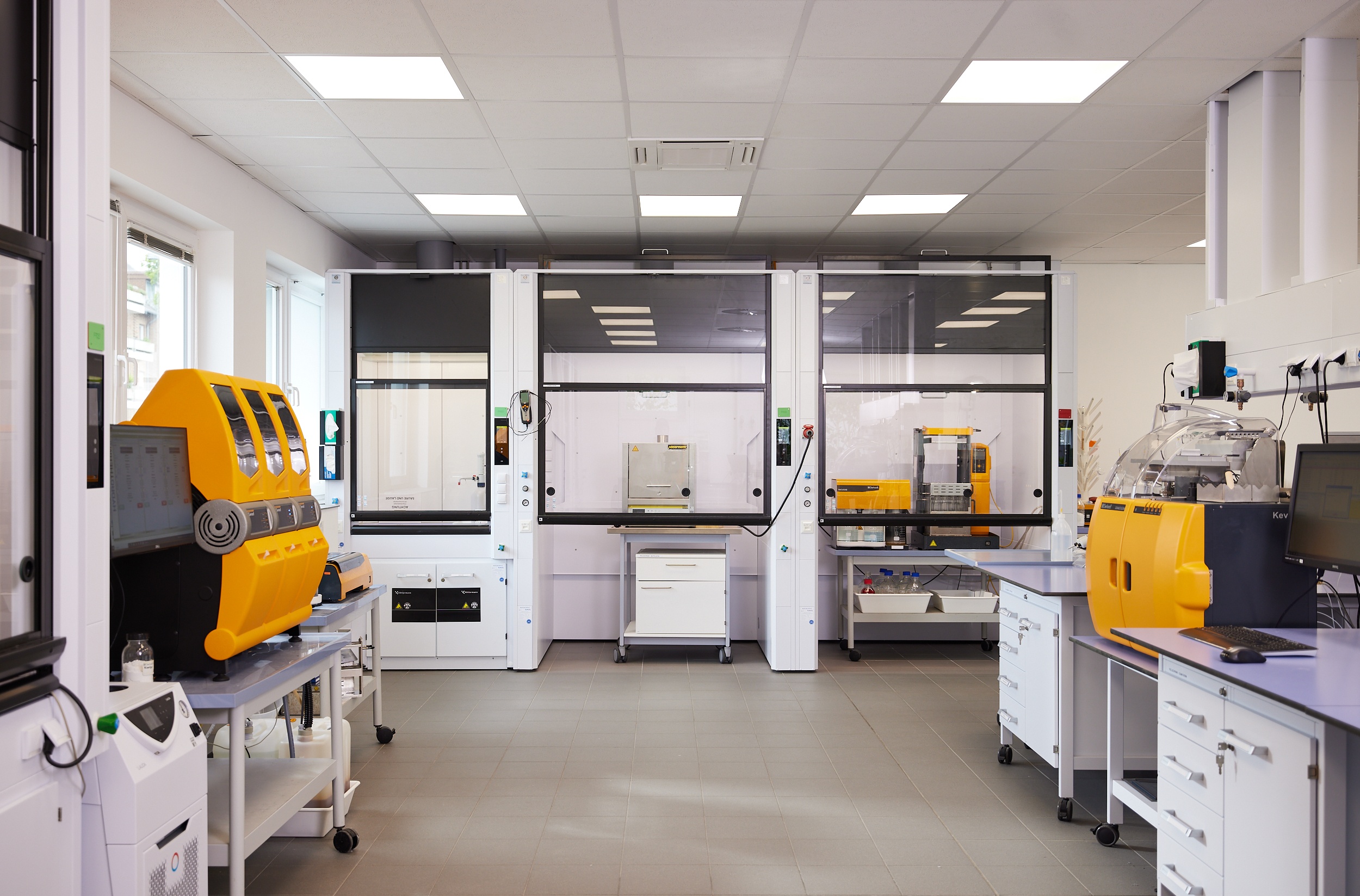
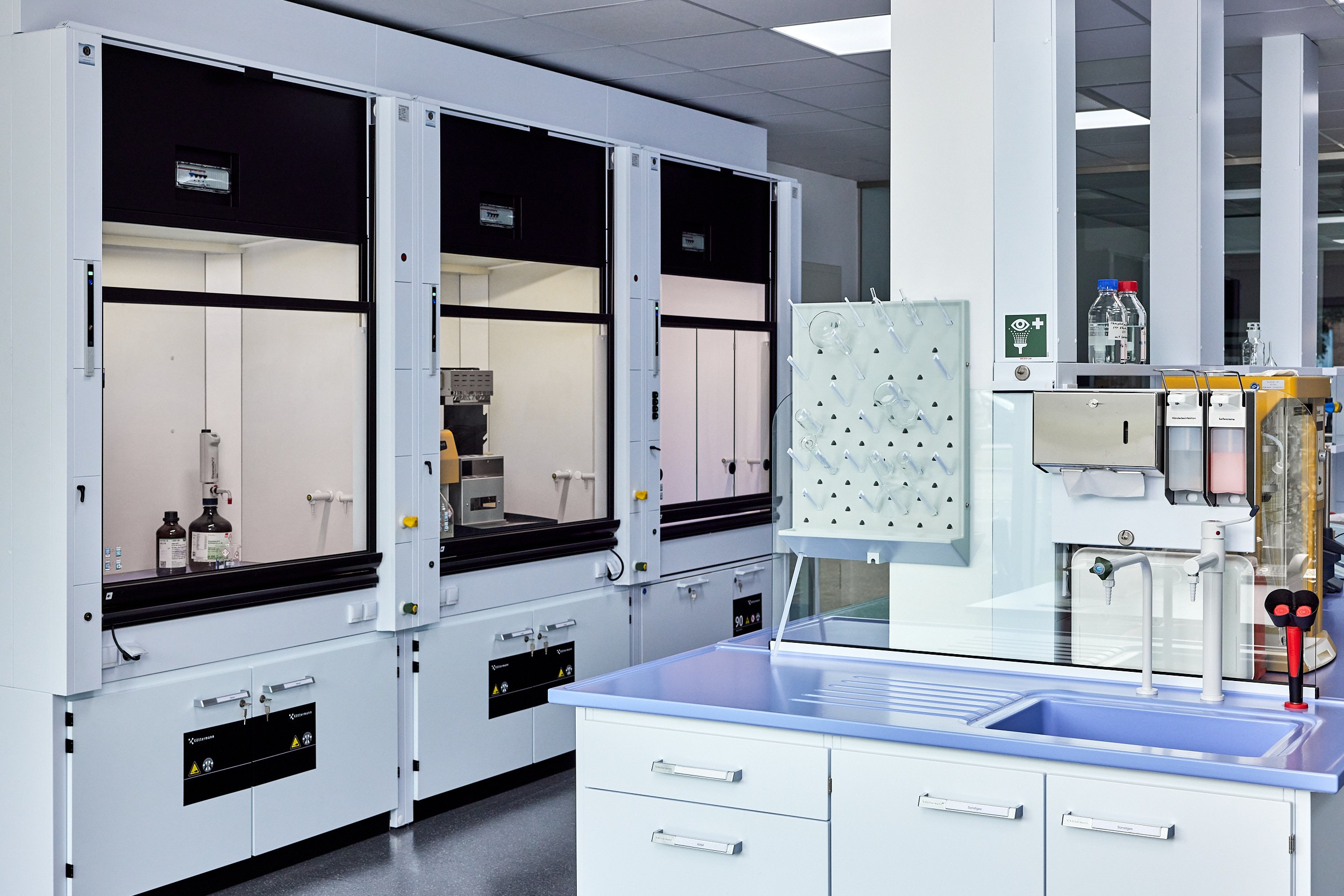
Daily laboratory work often follows a familiar routine: switching on equipment, preparing samples, working inside the fume cupboard — and rarely stopping to consider the complex technology operating in the background. Yet the laboratory fume cupboard is one of the most important safety systems in the lab. It influences protection, energy efficiency and sustainability and is still frequently underestimated.
This article highlights five aspects that even experienced professionals may not always be aware of.

1
Fume cupboards are major energy consumers and intelligent design can significantly reduce costs

Up to 60% of a laboratory’s total energy consumption can be linked to ventilation systems, with fume cupboards playing a central role. They continuously extract conditioned air, making ventilation both costly and CO₂-intensive. Alongside safety, reducing air consumption has therefore become one of the key priorities in modern fume cupboard development.

2
More airflow does not automatically mean more safety

A common assumption is that the higher the exhaust airflow, the safer the fume cupboard. In reality, this is only partly true.
While increased airflow may initially improve containment performance, modern fume cupboards achieve safety not through excessive air volumes, but through sophisticated geometry and carefully engineered airflow patterns. The result is maximum safety with minimal resource consumption.

3
Small operating mistakes can have major consequences

Fume cupboards are part of complex laboratory workflows. Their protective performance depends not only on construction, but also on correct usage.
Open sashes, incorrectly positioned equipment or even people walking past can significantly disturb airflow and reduce containment efficiency. Modern systems such as Köttermann AutoProtect automatically close the sash once work is completed. This reduces user-related errors, improves safety and saves additional energy.
If an object protrudes from the working area, Köttermann CloseGuard uses a light curtain system to automatically stop the sash movement.

4
Protection goes far beyond gases alone

Fume cupboards are often associated primarily with protection against gases and vapours. In reality, their protective function is much broader as defined by the European standard EN 14175:

  • preventing hazardous concentrations of gases, vapours or dust within the laboratory
  • preventing explosive atmospheres inside the fume cupboard
  • protecting against physical hazards such as chemical splashes or flying fragments¹

Fume cupboards protect not only against invisible hazards such as gases and dust, but also against sudden physical risks. They therefore provide far more than “chemical protection” — serving instead as comprehensive safety barriers within the laboratory environment.

5
High-tech solutions improve ergonomics and safety

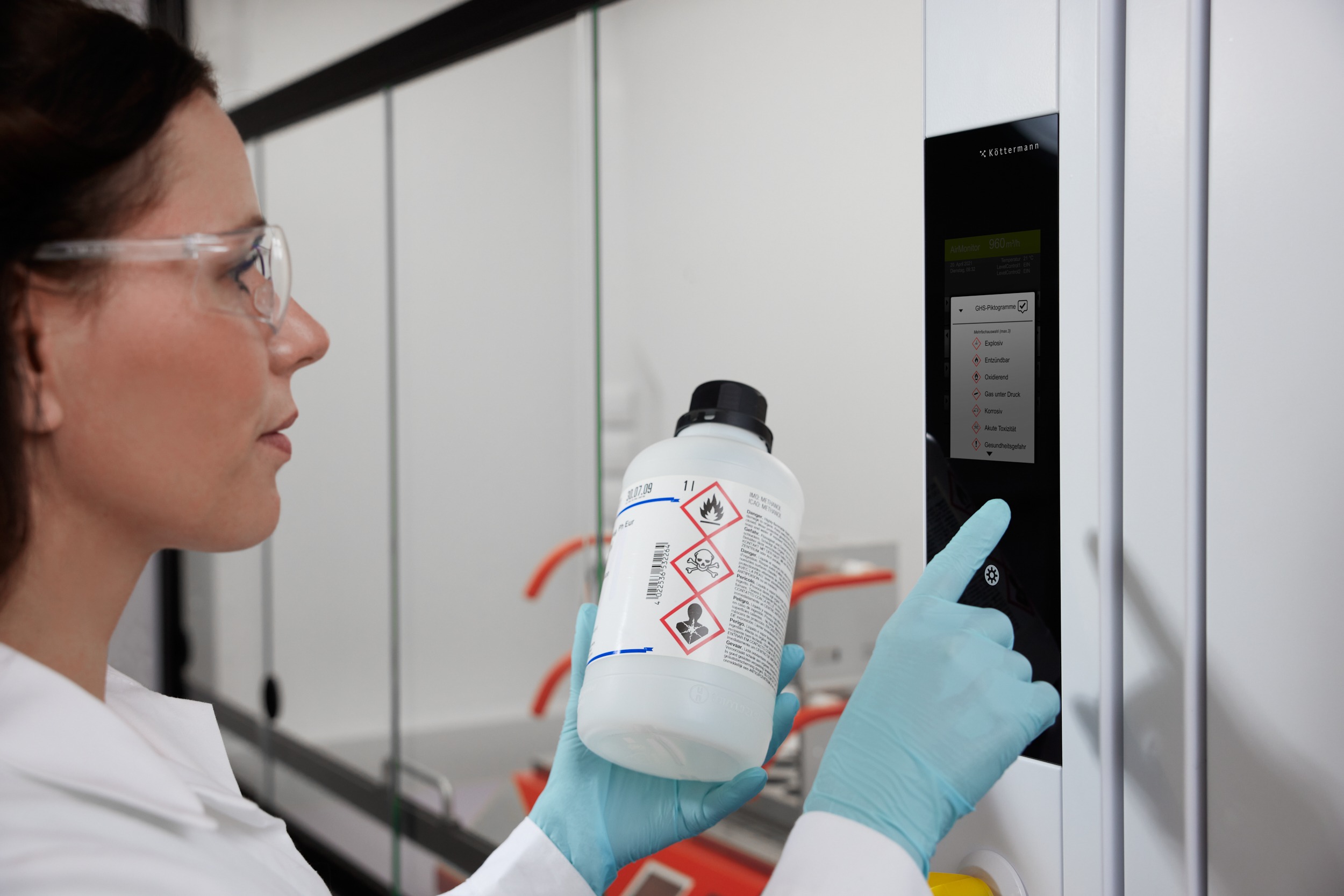
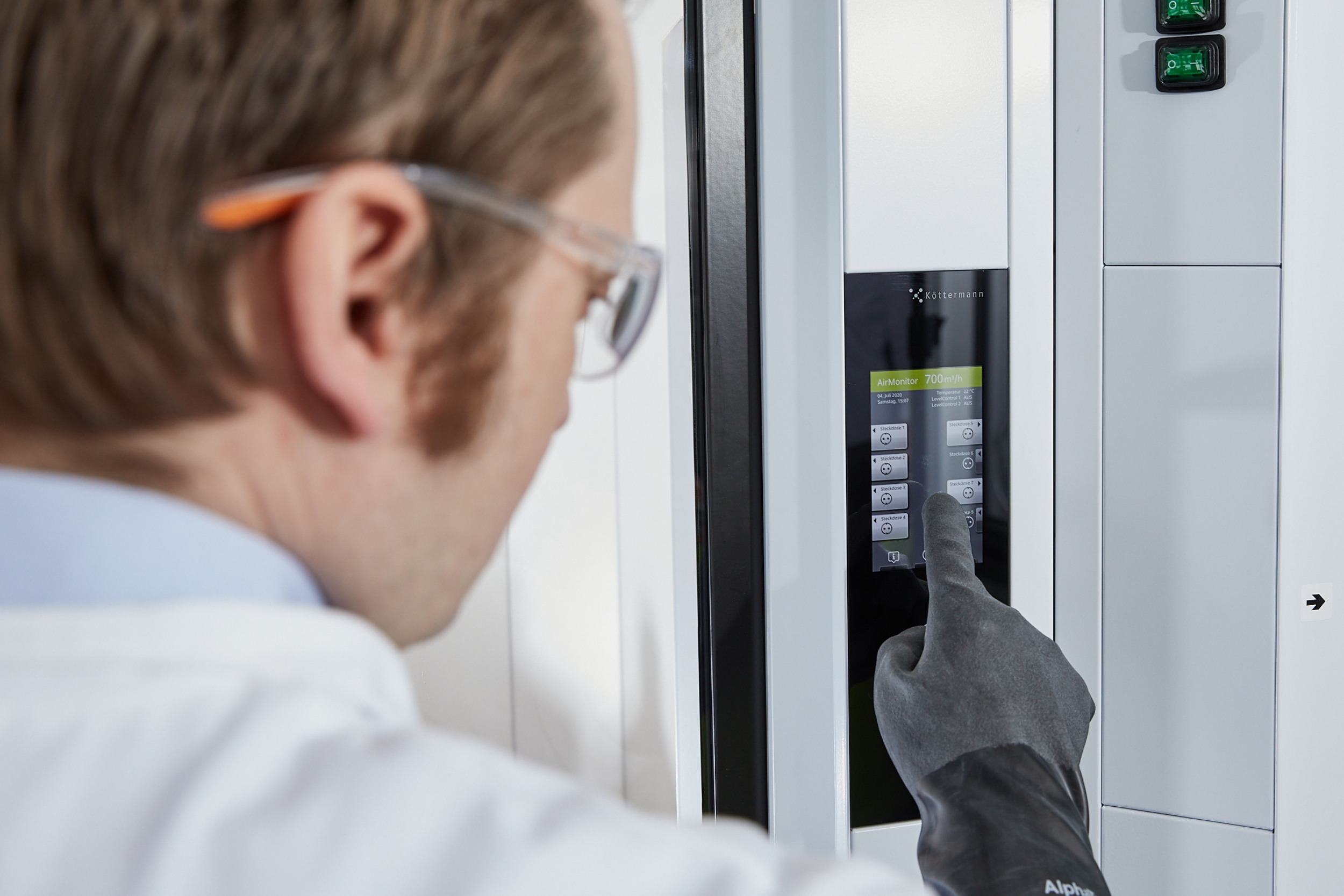
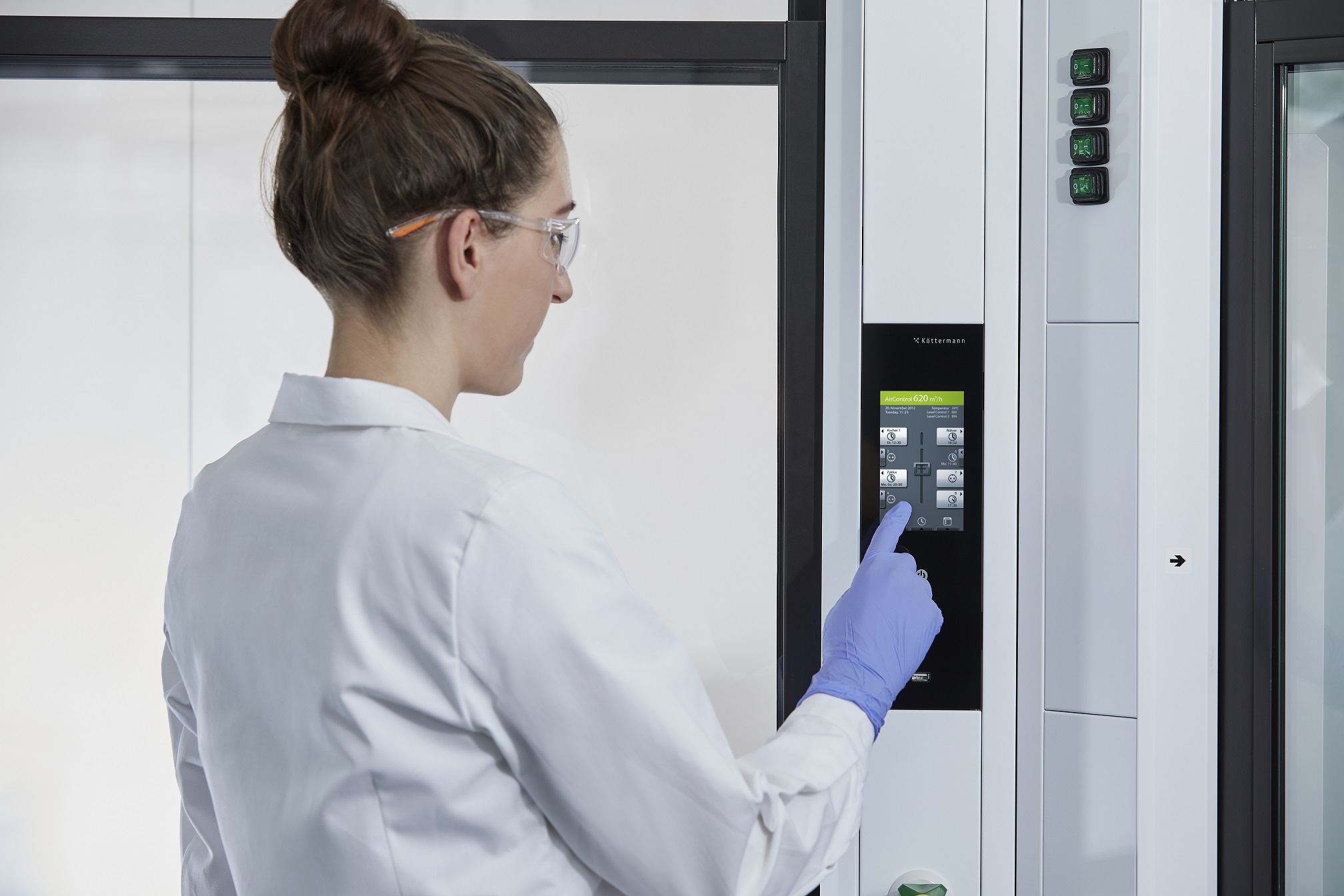
Modern fume cupboards have evolved into intelligent laboratory assistants. The Köttermann TouchTronic electronic control unit enables precise operation of all functions — even while wearing gloves.

It also allows hazardous substances used inside the cupboard to be displayed and socket timers to be programmed. In addition, circuit breakers with integrated measurement functions monitor power consumption and help identify energy-saving potential.

Conclusion

Modern fume cupboards are far more than simple exhaust systems. They play a key role in laboratory safety, energy efficiency, sustainability and ergonomics.

Innovative solutions such as the Köttermann EXPLORIS series demonstrate how protection, efficiency and user comfort can be intelligently combined. Anyone aiming to create a safe and sustainable laboratory environment can no longer overlook modern fume cupboard technology.

¹ Deutsche Gesetzliche Unfallversicherung (DGUV): Sicheres Arbeiten in Laboratorien – Grundlagen und Handlungshilfen. 1. Auflage 12/2008. S. 133

How Variable Air Volume Control Works

Exhaust air control systems are a key element here, as they reduce the exhaust air flow when the sash is closed without compromising the safety of the fume cupboard. The exhaust air volume flow is regulated via a motor-driven control flap, depending on the sash opening. For every operating state of the fume cupboard, only as much air is extracted from the laboratory room as is necessary for safe operation. With the sash closed, the volume flow of a fume cupboard can thus be reduced by approximately 50 per cent compared to the open state.

For easy handling in everyday work: with Köttermann fume cupboards, the sash opening is effortlessly adjusted via the TouchTronic electronic control unit using the slider on the display – precisely by sliding or selectively by tapping.

Product design – far more than aesthetics

What is also decisive, however, is the aerodynamics of fume cupboards. A well-thought-out product design reduces operating costs while meeting safety requirements. For example, thanks to its innovative air guidance, the Köttermann EcoPlus fume cupboard requires up to 30 % less exhaust air volume flow than standard fume cupboards – with consistently high safety. With an eight-hour working day, this saves up to 900 euros in annual operating costs per fume cupboard and actively contributes to sustainability at the same time. In 24-hour operation, costs of around 2,700 euros per year are even avoided. If you want to equip your laboratory sustainably, the EcoPlus is the right choice.


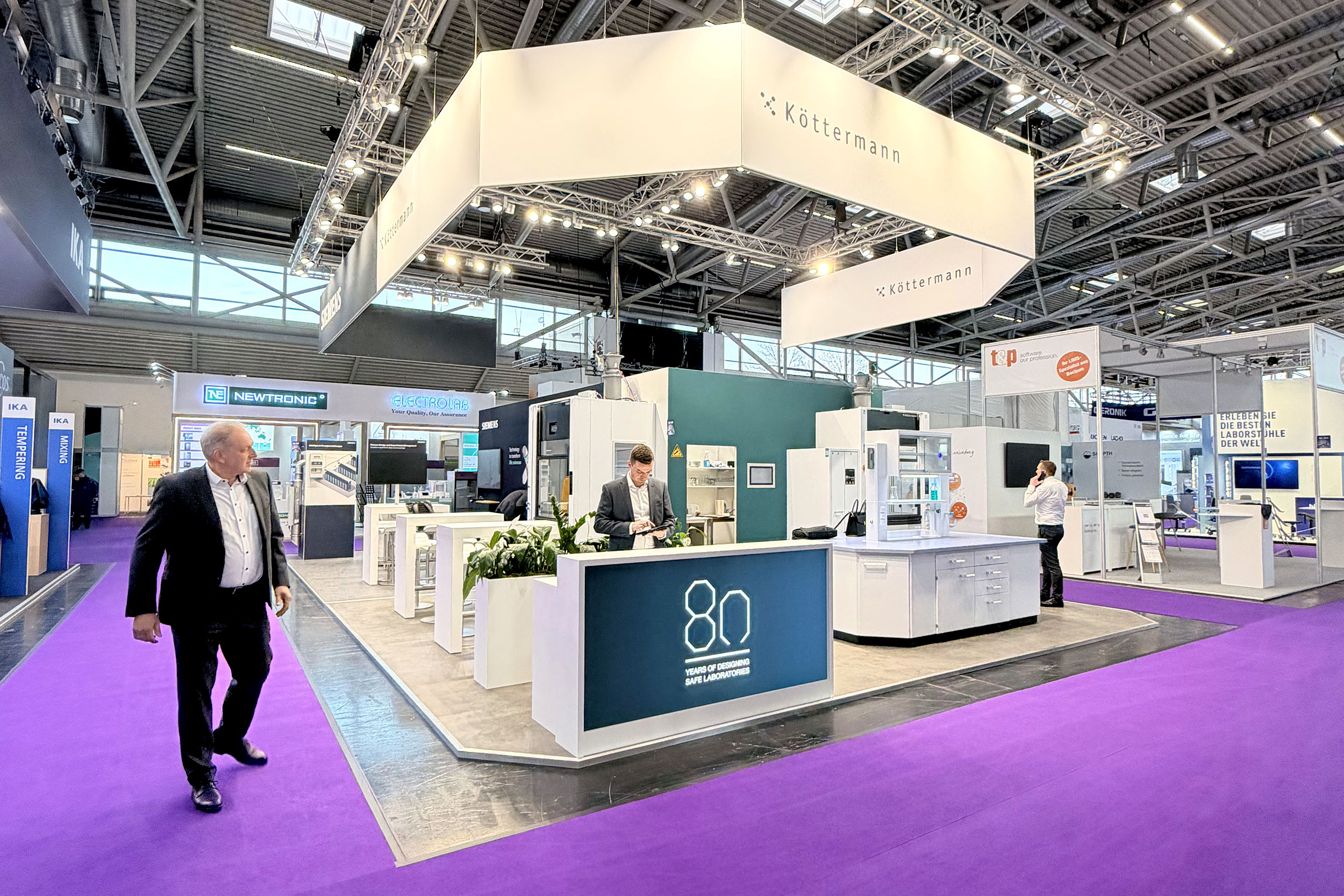
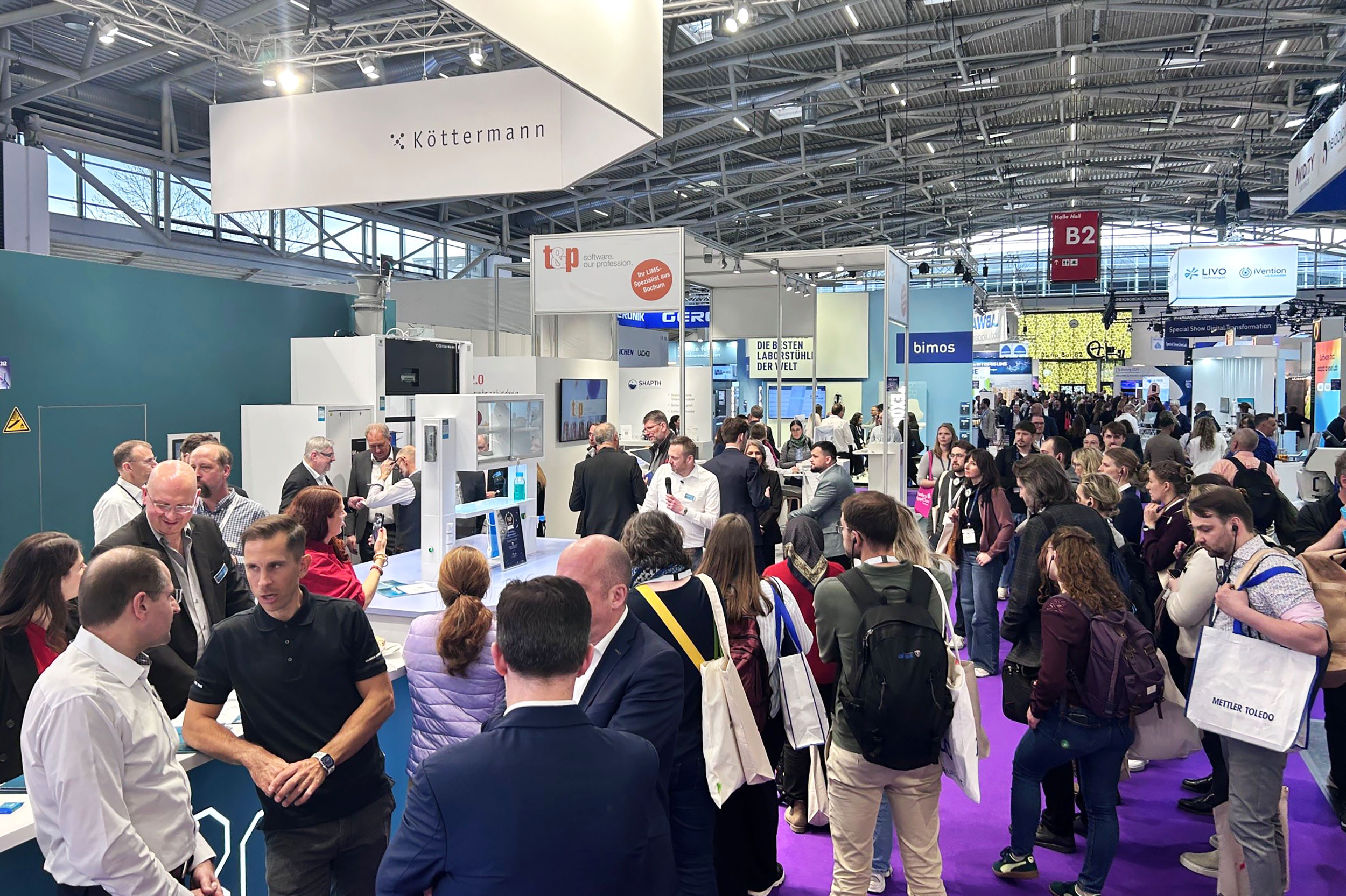
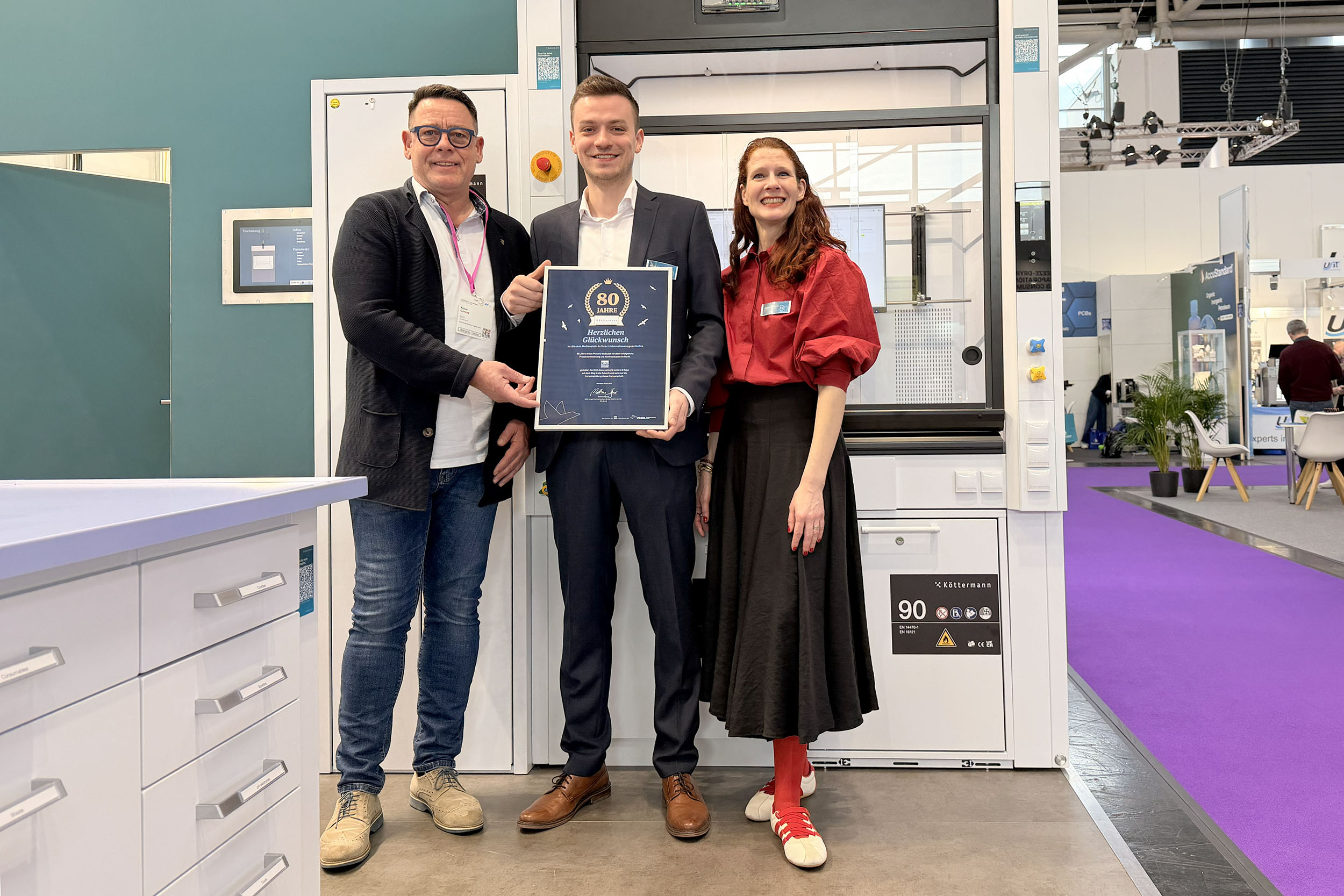
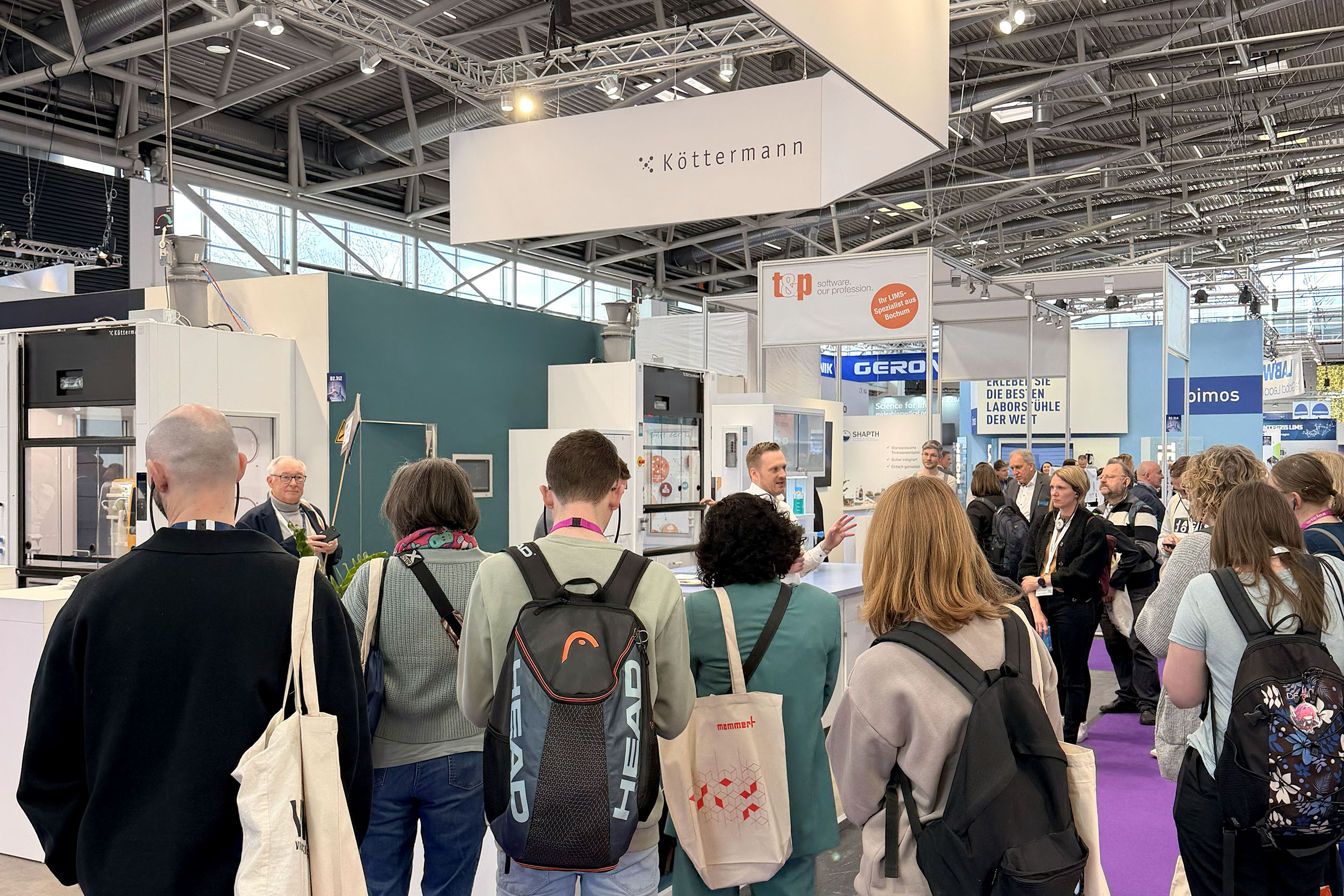
analytica 2026 is now behind us, and we are taking home the message we developed for the event, along with the positive feedback: the laboratory as an isolated workplace is a thing of the past. What we showcased at the trade fair in Munich is a laboratory that is already ready for use today, connected, transparent and efficient.

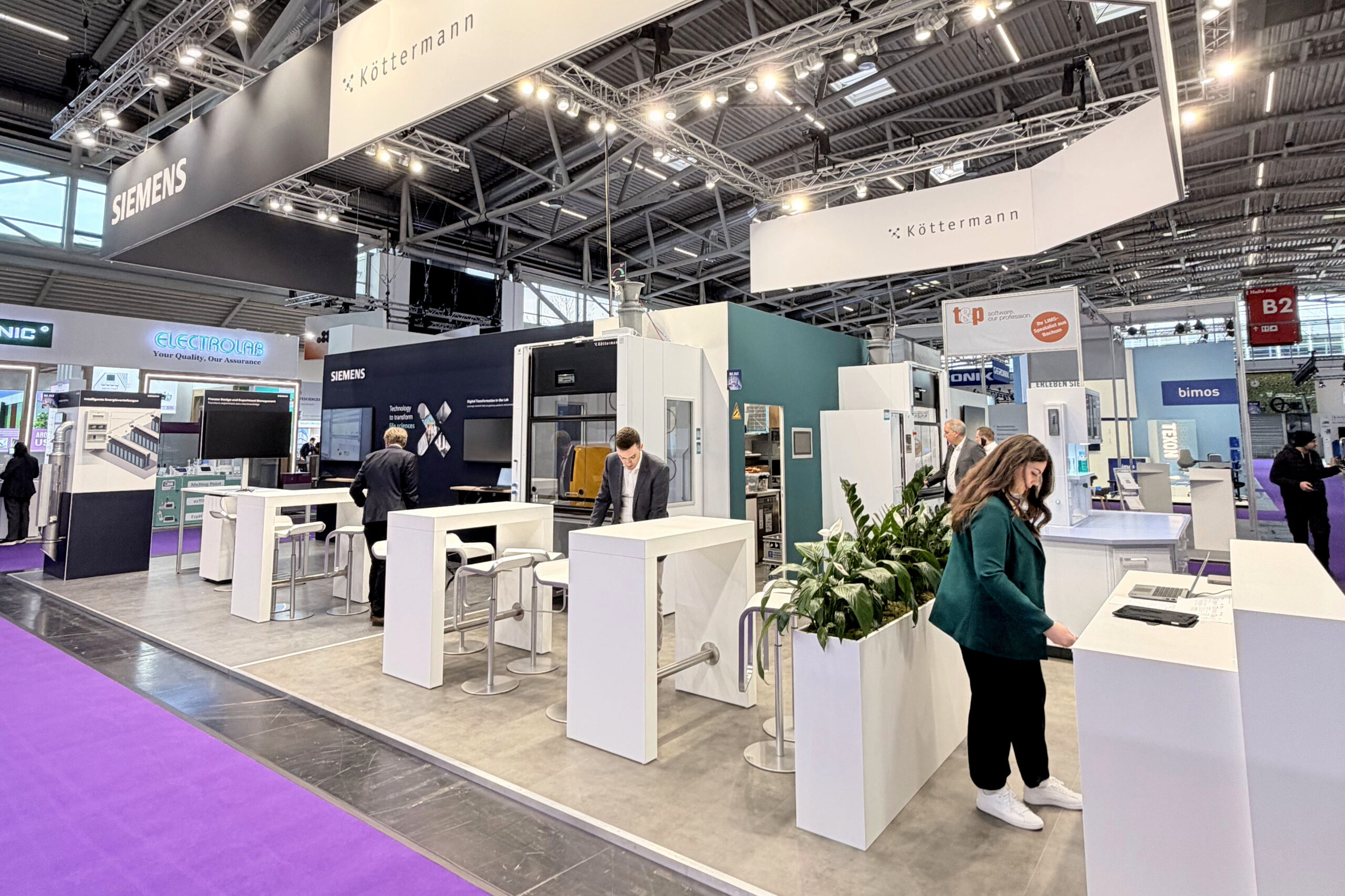
As a laboratory equipment manufacturer, we deliberately designed our stand to be a living example. Not merely as a showroom for individual products, but as a real-world application scenario in which infrastructure, equipment and data are conceived as an integrated whole.

Infrastructure as a Platform – what this actually means

Laboratory infrastructure is about more than just furniture. Fume cupboards, work surfaces and media supplies form the foundation. When these elements work in tandem with equipment, software systems and safety technology, they create real added value. That was precisely our approach at analytica.

Three partners, one system

We had three strong partners at our stand who brought this concept to life:

  • Siemens demonstrated how a laboratory’s status can be visualised digitally, from energy data for individual devices and sample tracking in the LIMS to room control via the Smart Room Operator. Siemens also provides an integrated solution for safety: the Sinorix al-deco extinguishing system automatically detects fires in the laboratory fume cupboard and combats them directly at the source, without manual intervention and with minimal damage. The result of the complete package: less loss of information, faster processes, clear documentation and maximum safety.
  • C. Gerhardt integrated the VAPODEST 500, an automated distillation system, directly into our laboratory fume cupboard. Connected to the Siemens system, samples were digitally recorded, tracked and analysed. An example from real-world laboratory practice: fewer manual steps, full traceability.
  • Liebherr Professional Appliances complemented the setup with an underbench laboratory refrigerator, integrated directly into the Köttermann laboratory workbench, monitored via Siemens technology, with precise temperature control and automatic alerts. Cooling, storage and monitoring, without any disruption.
What this means for laboratory planning

Anyone planning or modernising a laboratory today stands to benefit from precisely this approach: when infrastructure, equipment and data systems are coordinated from the outset, the result is not a collection of isolated solutions, but a system that grows, documents and protects.
As a manufacturer of laboratory infrastructure, we see it as our mission to create this platform. To find and integrate the right partners. And to offer solutions that really work in day-to-day laboratory operations.

Fancy finding out more about a connected laboratory?

If you’d like to see what a comprehensive system like this might look like for your specific situation, please feel free to get in touch. We’ll show you what’s possible today.

You can contact us here


    Fume cupboard technology in the spotlight at analytica

    Fume cupboards are essential for safe laboratory work—yet they are also among the biggest energy consumers in a lab. Rising energy prices and ambitious sustainability targets intensify the tension between maximum protection and responsible resource use. What’s needed are solutions that do not compromise occupational safety, but ideally enhance it, while making energy efficiency measurable and energy performance transparent.

    This is exactly where modern fume cupboard technologies come into play.

    Why fume cupboards must be reassessed 

    For decades, fume cupboards were operated according to a clear principle: maximum safety through high and constant extract air volumes. Increasingly, this approach reaches its limits—because what used to be a robust safety buffer has become a major cost and sustainability factor in daily operation. In many laboratories, ventilation systems and exhaust air account for around 40–60% of total energy consumption.

    That’s why “safety only” is no longer a sufficient benchmark. Today, fume cupboards must meet additional requirements: they should be safe, energy-efficient, and operationally controllable. This shifts their role within the overall laboratory system into sharper focus.

    Reassessment is not a technological gimmick—it’s a strategic necessity. Anyone who continues to view fume cupboards in isolation leaves significant potential untapped in operating costs and CO₂ reduction. What’s needed are solutions that keep safety fully standards-compliant while actively contributing to the optimisation of lab operation.

    The key question is no longer whether energy can be saved, but how safety and efficiency can be combined sustainably—without complicating everyday lab work.

    Efficiency in the lab comes from interaction—not from sacrifice

    Modern fume cupboard concepts follow a holistic approach. Instead of providing high air volumes across the board, extract air is controlled according to demand. Three factors are decisive:

    • Aerodynamically optimised fume cupboard designs that maintain containment even at reduced air volumes
    • Intelligent extract-air control systems that adjust volume flow dynamically to the sash position
    • Digital control and monitoring solutions that make energy consumption transparent and enable data-based adjustments.

    This means safety is achieved not by “more air”, but through precise engineering and smart control.

    Air flow optimisation of the EcoPlus laboratory fume cupboard
    Potential savings with the EcoPlus laboratory fume cupboard

    Trade fair focus: fume-cupboard technology that delivers measurable energy savings

    At the international trade fair analytica in Munich (24–27 March 2026), Köttermann and Siemens will jointly demonstrate how fume cupboards can be understood as part of a connected system. The focus is on practical solutions that deliver measurable impact in day-to-day laboratory operations.

    1

    Safety remains non-negotiable
    Compliance with all relevant standards and protection requirements remains the foundation—enhanced by intelligent airflow design that ensures safety even with reduced air demand.

    2

    Energy efficiency becomes predictable
    Variable volume flow systems, automatic sash functions and demand-based control strategies reduce energy consumption noticeably—without additional effort for lab staff.

    3

    Transparency creates new room for action
    Integrated measurement and monitoring make energy use visible. This enables well-informed decisions for sustainable lab strategies—from operational optimisation to long-term planning.

    From a single component to an overall concept

    The value of modern fume-cupboard technology doesn’t arise in isolation, but through interaction with building services, control systems and the usage concept. This is precisely where the joint approach of Köttermann and Siemens adds value: fume-cupboard technology is designed as an integral building block of a future-proof laboratory.

    Invitation to connect

    analytica provides space for professional exchange—about technical solutions, concrete savings potential, and how laboratories can be planned and operated to meet the requirements of safety, cost-effectiveness and sustainability simultaneously.

    Get your free ticket here: